
A headline analyzer can give you a score in seconds, but that score does not automatically tell you if the headline is actually good. Different tools look at different things, such as word choice, length, clarity, emotion, SEO signals, and sometimes completely different scoring rules.
That makes choosing one surprisingly confusing. A headline that scores 85 in one tool might get 62 in another, even though the wording has not changed.
So instead of comparing feature lists, I ran the same set of headlines through five popular headline analyzer tools and looked at what each tool actually catches, what it misses, and whether its suggestions are worth following.
Here’s what I found.
| Headline Analyzer | Best For | Analysis Focus |
|---|---|---|
| DDG Free Headline Analyzer | Detailed headline optimization | Clarity, structure, length, wording, overall headline quality |
| CoSchedule Headline Studio | Quick headline improvement | Word balance, clarity, sentiment, skimmability, headline structure |
| MonsterInsights Headline Analyzer | Bloggers who want simple feedback | Word balance, sentiment, headline type, length |
| AIOSEO Headline Analyzer | WordPress users | Word balance, power words, sentiment, length, headline type |
| Capitalize My Title Headline Analyzer | Writers comparing SEO and readability | Readability, SEO signals, sentiment, power words, title width |
1. DDG Free Headline Analyzer
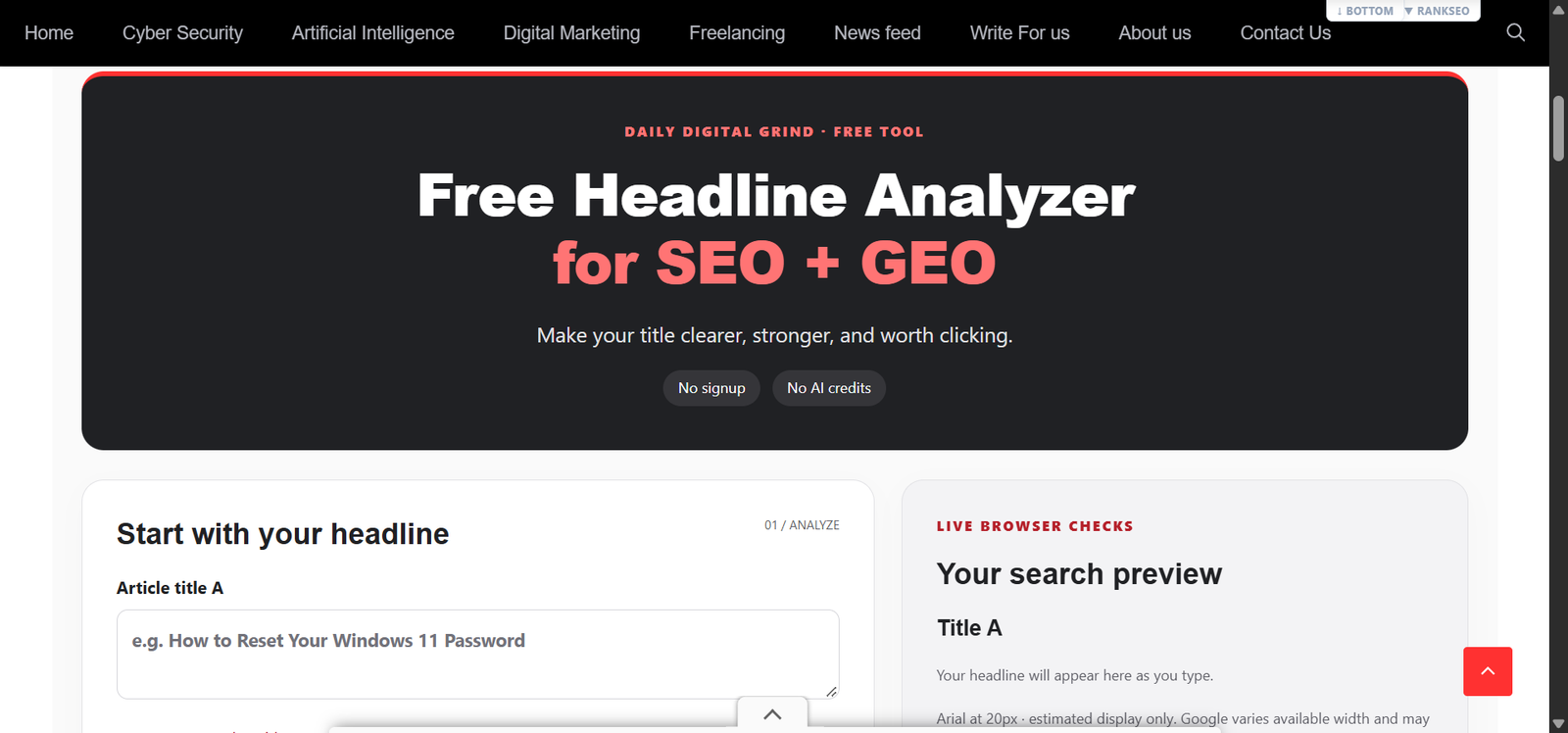
The DDG Free Headline Analyzer is built for a quick check before you publish. Instead of turning headline writing into a large optimization process, it gives you a score and feedback you can use to decide if the title needs another draft.
That makes it most useful when you already have a headline and want a fast second opinion. You can test a few variations, compare the feedback, and see which version looks stronger without adding another WordPress plugin or working through a large reporting dashboard.
For this comparison, we are running DDG through the same headlines as every other analyzer. The useful question is not whether our tool gives itself a high score; it is whether the feedback catches real problems and helps produce a better headline.
2. CoSchedule Headline Studio
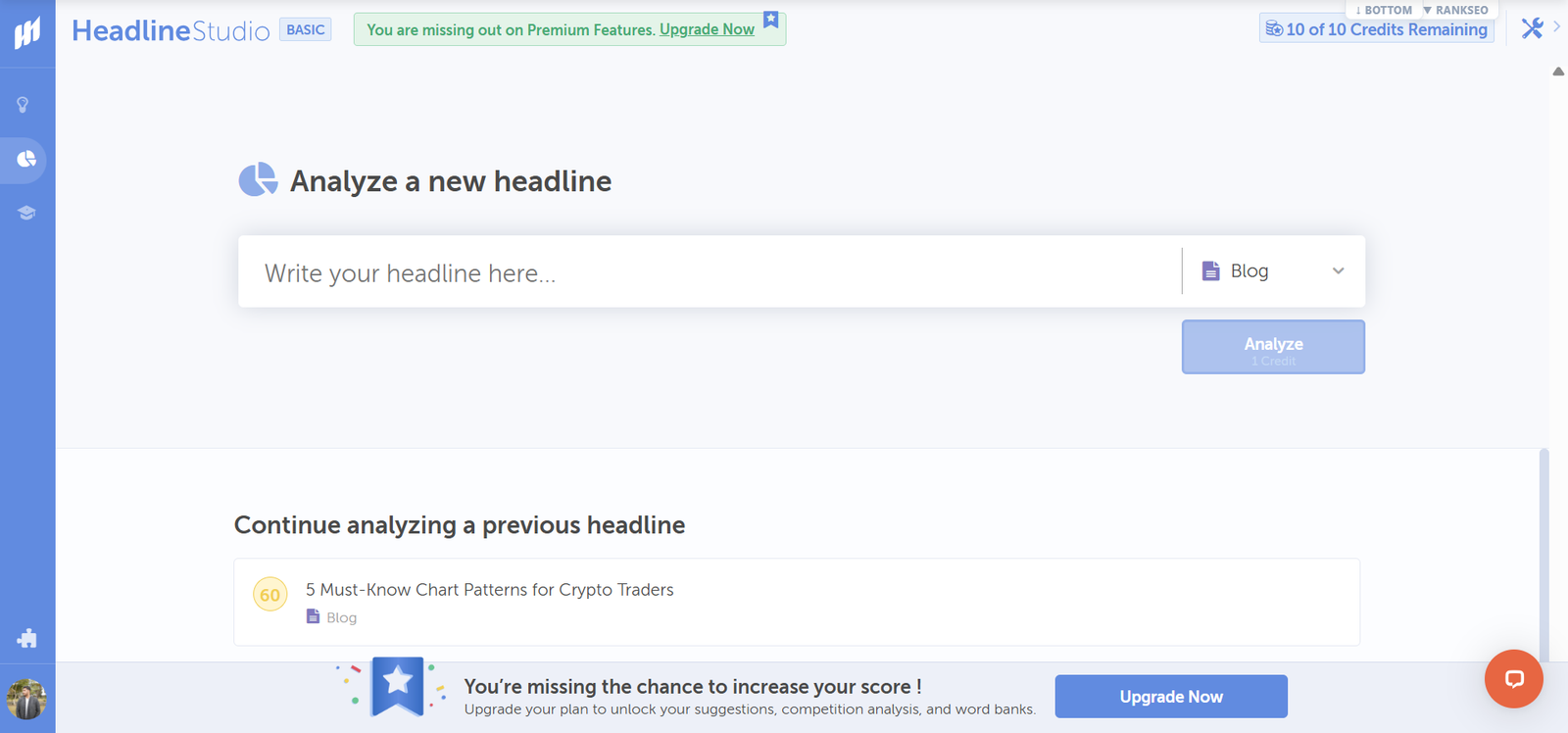
CoSchedule Headline Studio is one of the more detailed tools in this comparison. Its basic analysis looks at factors including word balance, headline type, word and character count, reading grade level, sentiment, clarity, and skimmability.
That depth is useful when you want to understand why a headline received its score. Instead of stopping at a number, you can see if the headline is difficult to scan, too complicated, too long, or lacking the mix of words CoSchedule expects.
The trade-off is that this can make headline optimization more complicated than it needs to be. CoSchedule also reserves some additional recommendations and SEO-focused analysis for its Premium plan.
3. MonsterInsights Headline Analyzer
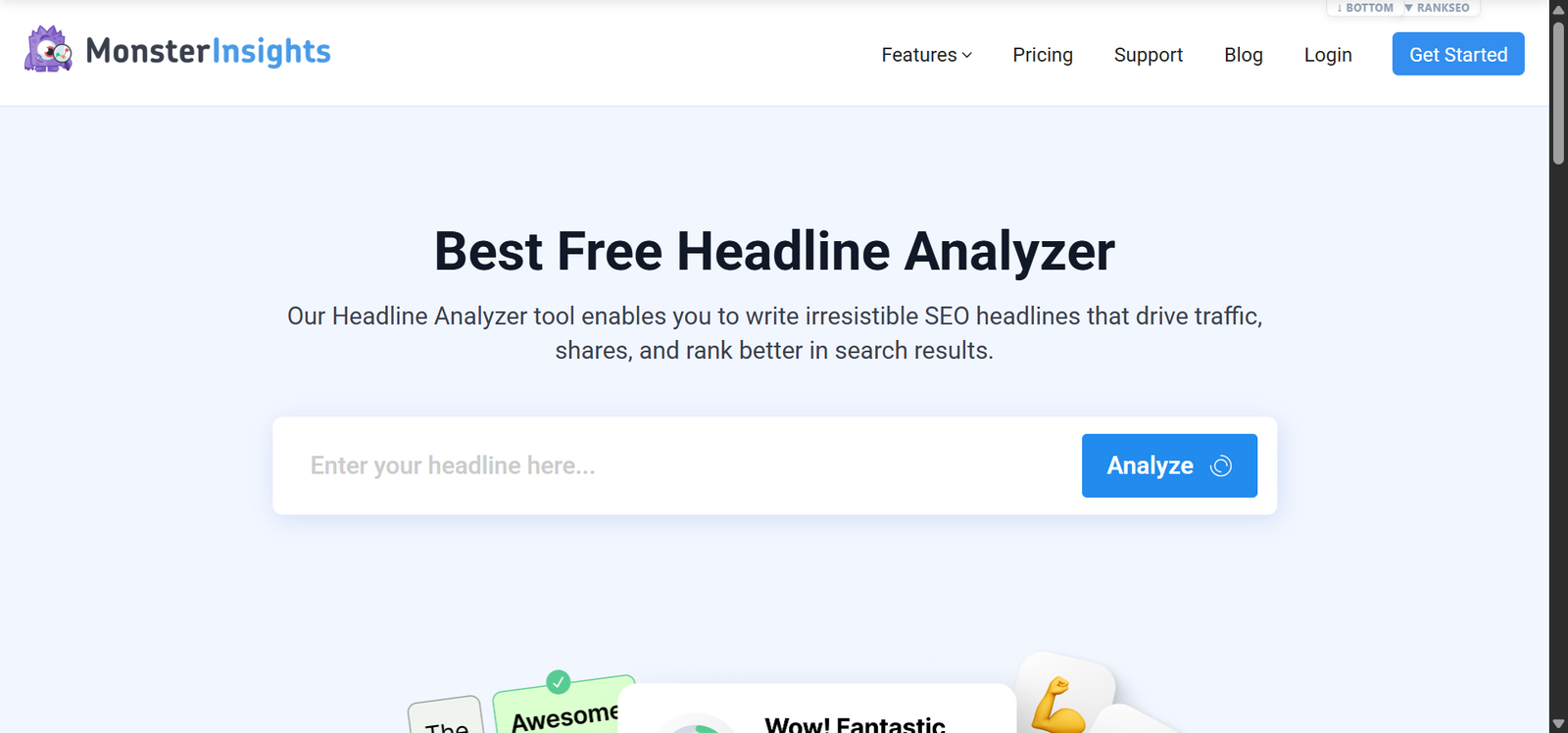
MonsterInsights takes a simpler approach. Its analyzer gives a score out of 100 and breaks the headline down using factors such as word balance, sentiment, headline type, character count, word count, and the words used at the beginning and end of the title.
You can use the web-based analyzer for a quick check, while MonsterInsights users can also analyze headlines directly inside the WordPress editor. The paid plugin has also added AI-generated headline alternatives that suggest rewritten versions.
The analysis itself still relies heavily on predefined headline rules. A headline can technically satisfy those rules without necessarily being the most relevant or appealing title for a particular search result.
4. AIOSEO Headline Analyzer
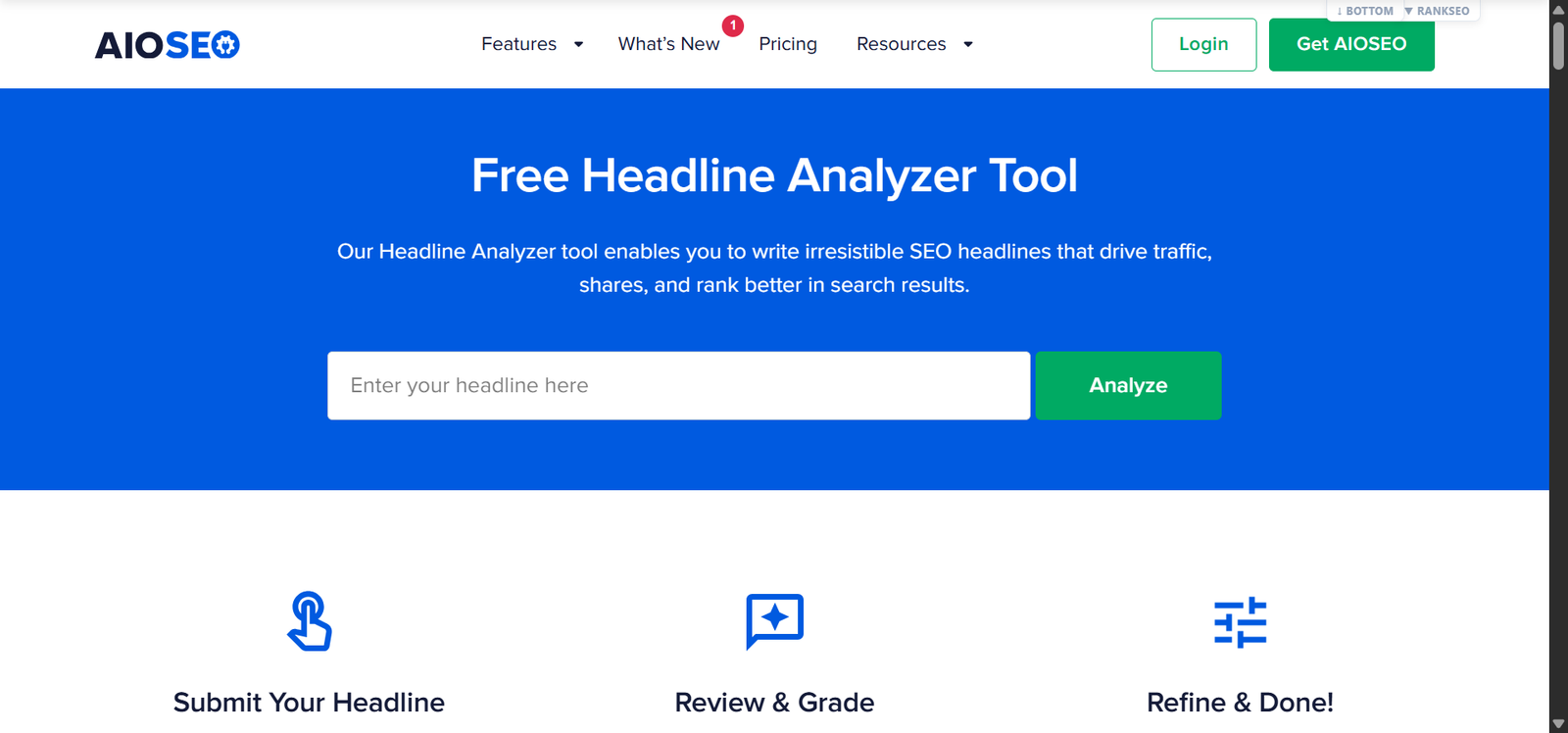
AIOSEO’s Headline Analyzer is particularly convenient for WordPress publishers because headline analysis is built into its content optimization workflow. It scores the headline and then explains how different parts of the title contributed to that result.
One of its main checks is word balance. AIOSEO separates words into common, uncommon, emotional, and power-word categories, then compares the headline against suggested ranges. It also evaluates character count, word count, sentiment, and headline type.
That can be useful for spotting obvious problems, especially if a title is too long, completely neutral, or structured awkwardly. The weakness is that optimizing too aggressively around word categories can encourage writers to change a clear headline simply to improve the score.
5. Capitalize My Title Headline Analyzer
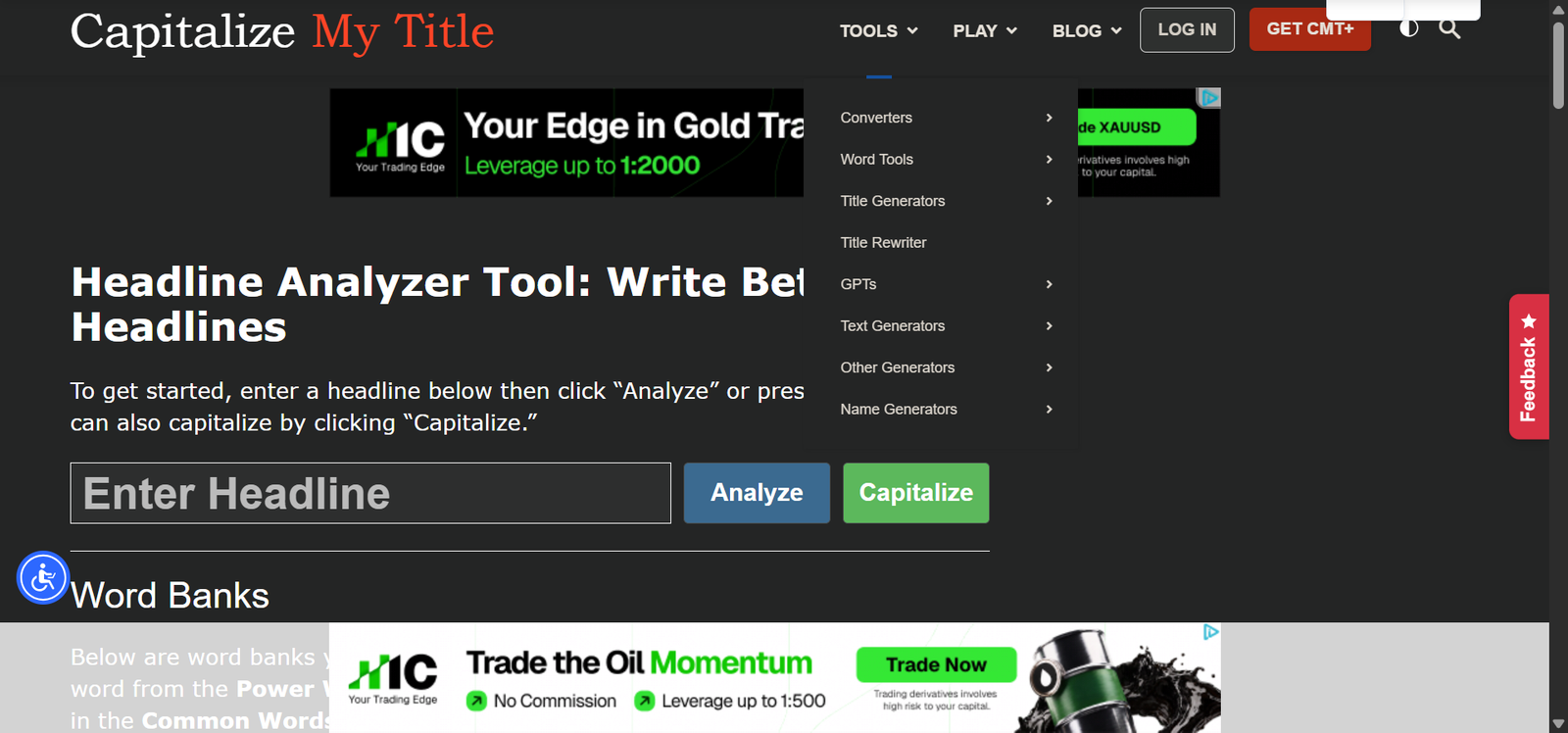
Capitalize My Title approaches headline analysis a little differently because it separates its feedback into readability, SEO, and sentiment instead of relying entirely on one type of evaluation.
Its analysis also includes details such as headline length, character count, power words, and estimated search-result pixel width. That last metric can be useful because two titles with the same number of characters can still take up different amounts of space in Google results.
The downside is that you can end up with a lot of numbers to interpret. A higher readability score, stronger sentiment score, or better pixel width does not automatically mean the headline is more useful to the person searching for the topic.
How the 5 Headline Analyzers Scored the Same Headlines
To compare the tools fairly, we entered the same six headlines into all five analyzers. We did not rewrite a headline between tools or change it to match a particular scoring system.
The test set intentionally includes different types of headlines. That gives us a better picture of how each analyzer behaves than testing five variations of the same style. The table below shows how the headline analyzers scored head-to-head.
| Test Headline | DDG | CoSchedule | MonsterInsights | AIOSEO | Capitalize My Title |
|---|---|---|---|---|---|
| How to Remove Malware From a Mac in 2026 | 92 | 58 | 76 | 79 | 60 |
| 7 Free VPNs Worth Using in 2026 | 89 | 72 | 61 | 61 | 78 |
| Why Your Outlook Email Signature Keeps Disappearing | 57 | 55 | 51 | 51 | 58 |
| I Used AI for Every Decision for a Week. That Was a Mistake. | 79 | 71 | 48 | 48 | 53 |
| Amazing Powerful Easy Secret Best Headline Success Now | 71 | 68 | 77 | 77 | 53 |
How We Chose and Tested the Headline Analyzer Tools
We chose five headline analyzers that represent slightly different approaches to headline scoring: a detailed standalone platform, WordPress-focused analyzers, a broader writing utility, and our own DDG tool.
To keep the comparison fair, we entered the same six headlines into every analyzer without changing the wording between tests. The set included an SEO-focused headline, a list headline, a problem-based headline, a curiosity headline, a generic headline, and one deliberately bad headline packed with attention-grabbing words.
We judged each tool using the same criteria:
- Score consistency: Did similar headlines receive similar treatment, or did the tool produce surprising results?
- Quality of feedback: Did it explain why a headline was weak, or simply return a number?
- Actionability: Could the suggestions actually help someone write a better version?
- Clarity: Was the analysis easy to understand without learning the tool’s scoring system first?
- SEO usefulness: Did it flag practical issues such as headline length, clarity, or search-focused wording?
- Resistance to bad optimization: Could the tool recognize that a headline full of “power words” could still be poor writing?
We also noted how much the five tools disagreed with each other. If the same headline receives very different scores across multiple analyzers, that is useful information in itself because it shows how dependent the final number is on each tool’s scoring method.
Why Headline Analyzer Scores Differ So Much
Headline analyzer scores can look more precise than they really are. A tool might give one headline 82 while another gives the exact same headline 64 because the two tools are not measuring headline quality in the same way.
Each analyzer has its own scoring system. One may give more weight to headline length and word balance, while another focuses more heavily on sentiment, readability, power words, or SEO-related signals. Some tools also reward specific headline formats such as lists, questions, or how-to titles.
This is why trying to reach a perfect score can backfire. You may improve the number by adding emotional words, shortening the title, or changing its structure while making the actual headline less natural or less relevant to the reader.
What Headline Analyzers Are Good At
Headline analyzers are especially useful for catching problems that are easy to miss after you have been staring at the same title for several minutes.
They can quickly flag titles that are unusually long, too short, difficult to scan, overly complicated, or missing elements that commonly make headlines easier to understand. They are also useful when you have three or four headline ideas and want another way to compare them.
For example, imagine you are deciding between:
Tips for Better Email Security
and
7 Ways to Protect Your Email Account From Hackers
A headline analyzer may highlight that the second version is more specific, contains a clear benefit, and gives the reader a better idea of what the article contains. You could probably reach the same conclusion yourself, but the tool makes that weakness easier to spot.
The best use of a headline analyzer is therefore editing. It can help you notice problems, test alternatives, and question your first draft before publishing.
What Headline Analyzers Still Get Wrong
Headline analyzers understand patterns much better than they understand context. A tool may reward words such as powerful, amazing, secret, or ultimate because those words fit its scoring rules. That does not mean adding them will make the headline better.
For instance, a title such as “Amazing Powerful Secret Ways to Get Incredible Results” may satisfy several scoring signals while telling the reader almost nothing useful.
The analyzer also does not fully understand the search result your headline will appear beside. It cannot always know that competitors are already using almost identical titles, that a certain phrase sounds unnatural in your niche, or that searchers expect a very specific answer.
Can a Headline Analyzer Predict CTR?
No headline analyzer can tell you that a score of 90 will produce a specific click-through rate.
CTR depends on much more than headline wording. Search position, query intent, competing titles, brand recognition, featured snippets, publication date, and even the type of search result can all affect how many people click.
For example, a headline could score highly because it is clear and emotional, but if every result above it promises the same thing, it may still struggle to attract attention. Another headline could receive a lower analyzer score but perform better because it answers the search query.
Which Headline Analyzer Should You Use?
If you want one tool to start with, our choice is the DDG Free Headline Analyzer. It helps you understand how strong the headline is, spot weak areas, and get enough feedback to improve the title.
This is also useful when comparing multiple versions of the same headline. Instead of trying to chase a perfect score, you can test each version, look at the feedback, and choose the title that communicates the topic most clearly.
The main lesson from testing these tools is that the highest score should not automatically decide your headline. Use the analyzer that gives you feedback you can understand and act on. A 75 with useful recommendations can be more valuable than a 92 that tells you very little about what should actually change.
FAQs
Are Headline Analyzer Scores Accurate?
They are useful, but they are not an objective measurement of headline quality. Each tool uses its own scoring system, which is why the same headline can receive very different scores across different analyzers. The feedback behind the score is usually more valuable than the number itself.
Can a Headline Analyzer Improve SEO?
A headline analyzer can help with parts of SEO, such as title tags and meta description, especially title length, clarity, keyword placement. It makes the search result easier to understand. It cannot tell you how competitive a keyword is, guarantee rankings, or replace proper search-intent and SERP research.
Should You Always Choose the Highest-Scoring Headline?
No, a headline can score highly because it follows the analyzer’s preferred formula while still sounding awkward or making the wrong promise. Compare the score with the actual wording and choose the headline that communicates the value of the page most clearly.
Can You Use a Headline Analyzer for Blog Titles and SEO Titles?
Yes, headline analyzers can be useful for blog posts, SEO titles, landing pages, email subject ideas, YouTube titles, and other short pieces of copy. The most important thing is to judge the suggestions in the context where the headline will actually appear.
Is There a Free Headline Analyzer?
Yes, the DDG Free Headline Analyzer lets you analyze a headline and review its feedback without needing to buy a premium headline-analysis suite. You can also test several headline variations before deciding which one to publish.