
According to IBM’s Cost of a Data Breach Report 2025, the global average cost of a data breach was $4.44 million. Although this was a 9% decrease from the previous year, it shows how expensive a single cybersecurity incident can be for organizations.
And the threats aren’t slowing down.
Verizon’s 2026 Data Breach Investigations Report found that 48% of the breaches it analyzed involved third parties, up from 30%. This shows how security risks can extend beyond an organization’s own systems to its vendors, software providers, and business partners.
With cyber threats affecting everything from personal accounts to global businesses, staying informed matters more than ever.
For that reason, we’ve compiled 13 of the best cybersecurity blogs to follow in 2027, including Daily Digital Grind, Krebs on Security, BleepingComputer, Google Project Zero, and several other valuable resources.
Here’s a quick overview of each.
| Cybersecurity Blog | Best For | Main Focus |
|---|---|---|
| Daily Digital Grind | Beginners, students, and everyday technology users | Cybersecurity guides, online safety, AI, and practical technology tutorials |
| Krebs on Security | Readers interested in cybercrime investigations | Cybercrime, fraud, data breaches, and investigative reporting |
| BleepingComputer | Readers following breaking cybersecurity news | Ransomware, malware, vulnerabilities, and security incidents |
| The Hacker News | IT professionals and cybersecurity enthusiasts | Cyber threats, vulnerabilities, security news, and industry developments |
| Schneier on Security | Readers seeking expert security perspectives | Security analysis, privacy, surveillance, and security policy |
| SANS Institute | Cybersecurity students and practitioners | Security education, incident response, and technical analysis |
| Google Project Zero | Security researchers and vulnerability analysts | Zero-day vulnerabilities, exploit research, and software security |
| Cisco Talos | Threat intelligence analysts | Malware research, threat intelligence, and attacker techniques |
| The DFIR Report | Incident responders and security analysts | Real-world cyberattack investigations and digital forensics |
| Palo Alto Networks Unit 42 | Enterprise security teams and researchers | Advanced threat intelligence, incident response, and cybercrime research |
| Huntress | Small businesses, MSPs, and security teams | Threat detection, attacker behavior, and real-world security incidents |
| Malwarebytes Labs | Everyday internet users and security enthusiasts | Online scams, malware, privacy, and consumer cybersecurity |
| PortSwigger Research | Penetration testers and web security researchers | Web application vulnerabilities, exploitation techniques, and security research |
1. Daily Digital Grind – Best for Practical Cybersecurity Guides
Daily Digital Grind is a technology publication covering cybersecurity, artificial intelligence, digital marketing, and practical technology guides. Its cybersecurity content focuses on explaining security concepts and helping readers understand the threats they may encounter online.
Rather than concentrating on highly technical malware research, the website covers subjects such as phishing, ransomware, network security, and protecting connected devices.
This makes it a useful starting point for readers who want to build their cybersecurity knowledge before exploring more advanced research publications. For instance, topics such as network security threats and QR code phishing help explain how common attacks work and why they matter.
Daily Digital Grind is particularly relevant for readers who prefer straightforward explanations and practical examples over heavily technical security reports.
2. Krebs on Security
Krebs on Security is an independent cybersecurity publication operated by investigative journalist Brian Krebs. It focuses on uncovering cybercrime activities, examining criminal operations, and investigating security incidents that affect organizations and individuals.
What makes Krebs on Security particularly valuable is its investigative approach. Instead of simply announcing a breach, its reporting often explores the people, infrastructure, and criminal networks behind an incident.
For example, its 2026 reporting on the Snowflake-related extortion cases examined the accused individuals, stolen data, and wider implications of the attacks. The publication also investigated suspicious smart TV applications linked to residential proxy networks and advertising fraud.
3. BleepingComputer
BleepingComputer is a cybersecurity and technology publication known for reporting ransomware incidents, malware campaigns, security vulnerabilities, data breaches, and software updates.
One of its strengths is combining timely security reporting with technical context. Articles often explain which products are affected, what attackers are doing, and what organizations or users should know about a security incident.
The website also publishes troubleshooting information and technology support resources, making it useful beyond cybersecurity news alone.
4. The Hacker News
The Hacker News is a cybersecurity news publication covering emerging threats, security vulnerabilities, malware campaigns, data breaches, and developments across the security industry.
Its coverage is particularly useful for identifying security stories that are receiving attention across the industry. Rather than focusing on a single area, it reports on subjects ranging from cloud security and identity threats to software vulnerabilities and attacker techniques.
The publication also covers security research published by vendors and independent researchers. So, for professionals who want a broad overview of the cybersecurity landscape, The Hacker News can serve as a convenient daily reading source.
5. Schneier on Security
Schneier on Security is the long-running security blog of Bruce Schneier, a security technologist and author known for examining cybersecurity through technical, social, and policy perspectives.
Unlike publications that primarily report new vulnerabilities or malware campaigns, Schneier on Security frequently explores the larger questions behind security decisions.
Its articles discuss subjects such as encryption, surveillance, digital privacy, government policy, and how organizations approach risk. This blog is worth following for readers who want to think more critically about security issues and understand how technology intersects with society.
6. SANS Institute
SANS Institute Cybersecurity Blog publishes educational articles, technical analysis, and expert perspectives across a wide range of cybersecurity disciplines. It covers digital forensics, incident response, cyber defense, cloud security, security awareness, and other specialist topics.
A major strength is the involvement of experienced instructors and industry practitioners. Readers can find material addressing both technical security challenges and the decisions security teams face in real organizations.
For example, SANS published a September 2026 analysis examining claims about frontier AI and cybersecurity, with contributions from multiple faculty members.
7. Google Project Zero
Google Project Zero is Google’s dedicated security research team, focused on discovering serious vulnerabilities in widely used software and hardware.
Unlike general cybersecurity news publications, Project Zero publishes detailed technical investigations explaining how vulnerabilities are discovered, how they can be exploited, and what makes certain security weaknesses particularly dangerous.
Its research covers operating systems, browsers, mobile devices, and other technologies used by millions of people. For example, its 2026 publications include investigations into Windows exploitation techniques and zero-click exploit chains affecting Google Pixel devices.
8. Cisco Talos
Cisco Talos is the threat intelligence and security research organization associated with Cisco. Its blog publishes investigations into malware, cybercriminal activity, vulnerabilities, and emerging attack techniques.
What makes Cisco Talos useful is its focus on understanding how threats operate. Its researchers examine malicious software, attacker infrastructure, and patterns observed across security incidents.
The blog also provides context about the tactics attackers use, helping security teams understand how different threats may affect their organizations.
9. The DFIR Report
The DFIR Report is a cybersecurity research publication focused on digital forensics and incident response (DFIR).
Its biggest strength is documenting real-world intrusions. Rather than discussing attacks only in theory, the publication examines evidence from investigated incidents to explain how attackers gained access, moved through networks, and attempted to achieve their objectives.
Reports commonly include attack timelines, technical observations, and indicators that security teams can use to investigate similar activity.
10. Palo Alto Networks Unit 42
Palo Alto Networks Unit 42 is the threat intelligence and incident response research team at Palo Alto Networks.
Its research covers ransomware, cybercriminal organizations, nation-state threats, cloud security, and emerging attack methods.
Unit 42 is particularly useful for its detailed investigations and analysis of attacker behavior. Its publications help security professionals understand not only what threats exist but also how they operate and which organizational weaknesses attackers may exploit.
11. Huntress
Huntress publishes cybersecurity research and educational content focused on real-world attacks, threat detection, and defensive security.
One of its strongest areas is explaining how attackers compromise business environments, including Microsoft 365 accounts, endpoints, and remote management tools.
In October 2026, for example, Huntress published an investigation into an Akira ransomware attack and research about a phishing campaign that abused Microsoft Power BI links to distribute unauthorized remote management software.
12. Malwarebytes Labs
Malwarebytes Labs publishes cybersecurity news, threat research, and practical information about malware, phishing, online scams, and digital privacy.
Its coverage is particularly relevant to common threats affecting consumers, including fake websites, fraudulent messages, malicious downloads, and account theft.
One reason Malwarebytes Labs is worth following is its use of familiar examples to explain how scams work. Rather than only describing technical vulnerabilities, its articles often show how attackers try to deceive ordinary users.
13. PortSwigger Research
PortSwigger Research focuses on discovering and explaining vulnerabilities in web applications and the technologies that support them.
The research team is associated with PortSwigger, the company behind Burp Suite, a widely used web security testing platform.
Unlike general security news websites, PortSwigger Research concentrates on technical discoveries involving web application behavior, authentication, request handling, and other security weaknesses.
Which Cybersecurity Blogs Should Beginners and Professionals Follow?
The best cybersecurity blogs to follow depend on a reader’s experience and interests. Someone learning about phishing and password security will need different resources from a security analyst investigating ransomware or a researcher studying software vulnerabilities.
For instance, someone learning about network security threats may benefit more from accessible cybersecurity tutorials than highly technical reports about reverse engineering or exploit development.
The following table makes it easier to choose cybersecurity blogs based on different interests.
| Reader Type | Recommended Blogs | Main Benefits |
|---|---|---|
| Beginners | Daily Digital Grind, Malwarebytes Labs | Straightforward explanations of scams, online safety, and common threats |
| Cybersecurity Students | SANS Institute, PortSwigger Research | Technical knowledge, security concepts, and practical learning |
| Security Analysts | Cisco Talos, The DFIR Report | Malware analysis, attacker techniques, and incident investigations |
| Business Owners | Huntress, BleepingComputer, Daily Digital Grind | Business security risks, ransomware, and security updates |
| Vulnerability Researchers | Google Project Zero, PortSwigger Research | Software vulnerabilities, exploitation techniques, and original research |
| Cybercrime Enthusiasts | Krebs on Security, Schneier on Security | Cybercrime investigations, security analysis, and privacy issues |
A beginner, for example, may encounter an unfamiliar attack called QR code phishing, or quishing. An educational cybersecurity blog can explain how that scam works, while a security news publication may focus on newly discovered campaigns involving malicious QR codes.
How Can You Identify a Reliable Cybersecurity Blog?
A reliable cybersecurity blog should provide accurate information, support important claims with evidence, and explain security developments without unnecessary exaggeration.
Not every cybersecurity website publishes original research. Some focus on reporting security news, while others specialize in analyzing vulnerabilities, investigating incidents, or making technical topics easier to understand.
For instance, reporting about the Microsoft SharePoint cyberattack in July 2025 becomes more useful when it identifies affected systems, explains the vulnerabilities involved, and connects the incident to official security advisories.
The following checklist can help evaluate whether a cybersecurity blog deserves a place in a regular reading list.
| What to Check | Why It Matters |
|---|---|
| Credible Sources | Official advisories, research papers, and incident reports make important claims easier to verify. |
| Original Research | Malware analysis, vulnerability discoveries, and incident investigations provide insights beyond repeated news stories. |
| Technical Accuracy | Correct details about affected systems, attack methods, and mitigations reduce misinformation. |
| Clear Explanations | Complex cybersecurity topics should be understandable to their intended audience. |
| Regular Updates | Security information can become outdated as vulnerabilities are patched and threats evolve. |
| Transparent Corrections | Reliable publications acknowledge and correct factual errors. |
| Editorial Independence | Sponsored content and commercial relationships should be clearly disclosed. |
Why Does Following Different Cybersecurity Sources Matter?
Depending on a single cybersecurity publication can leave important gaps in understanding. A website focused on ransomware news may not cover application security research in depth, while a vulnerability research blog may not provide everyday advice about online scams.
The variety of cyber threats is one reason different sources are useful.
According to Verizon’s 2026 Data Breach Investigations Report, 31% of breaches analyzed began with the exploitation of software vulnerabilities, making vulnerability exploitation a leading initial access method in the report.
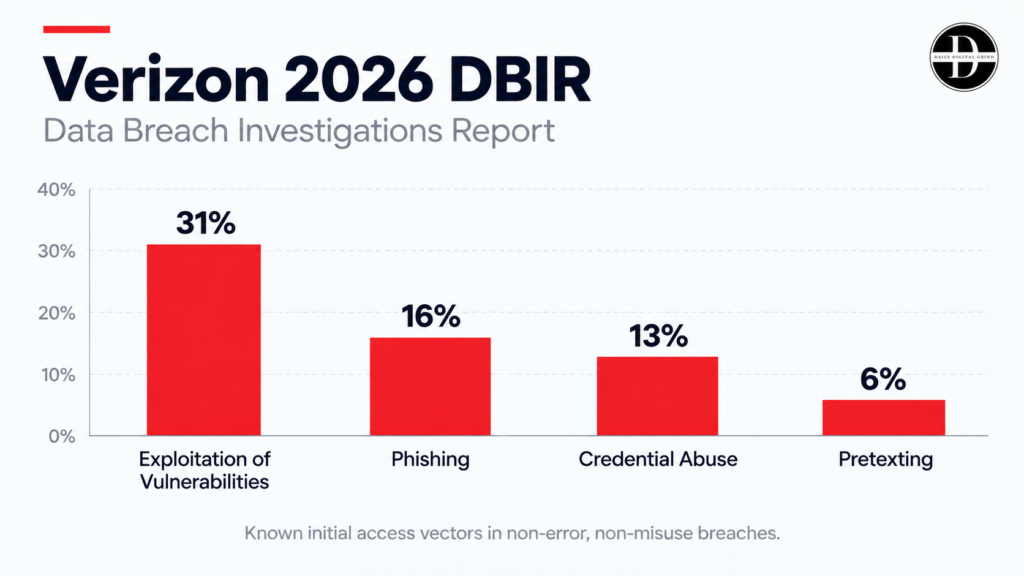
This helps explain why technical research from publications such as Google Project Zero and PortSwigger Research matters. Their work can provide detailed insights into software weaknesses and the techniques used to exploit them.
At the same time, Verizon reported that 48% of breaches in its 2026 dataset involved third parties, compared with 30% in the previous report. Security risks can therefore extend beyond an organization’s own systems to suppliers, vendors, and connected services.
These findings also help explain growing interest in approaches such as Zero Trust security, which emphasizes verifying access requests rather than automatically trusting users or devices because they’re already inside a network.
How Can You Stay Updated on Cybersecurity Without Information Overload?
Trying to follow too many security publications can quickly become overwhelming, especially when several websites report the same incident. A more practical approach is to follow a small number of sources that serve different purposes.
The table below would come in handy in such a circumstance.
| Reading Routine | Suggested Sources | What to Focus On |
|---|---|---|
| Daily: 5–10 minutes | BleepingComputer, The Hacker News | Major breaches, critical vulnerabilities, and important security developments |
| Weekly: 15–20 minutes | Krebs on Security, Cisco Talos, Daily Digital Grind | Cybercrime investigations, malware research, and emerging attack techniques |
| For technical learning | SANS Institute, PortSwigger Research | Security fundamentals, vulnerability research, and hands-on learning |
| For practical cybersecurity advice | Daily Digital Grind, Malwarebytes Labs | Online safety, scam prevention, and everyday security practices |
For example, someone managing a home network may find information about protecting Wi-Fi from hackers more immediately useful than a detailed analysis of an exploit targeting enterprise software they don’t use.
Final Thoughts
The best cybersecurity blogs provide more than a collection of security headlines. They help readers understand emerging threats, investigate real-world incidents, and make informed decisions about digital security.
Publications such as Krebs on Security, Daily Digital Grind, The Hacker News, and BleepingComputer offer valuable cybersecurity reporting, while Google Project Zero, Cisco Talos, and The DFIR Report provide specialized technical research.
FAQs
What Is the Best Cybersecurity Blog for Beginners?
Daily Digital Grind is a useful starting point for readers interested in everyday cybersecurity, online scams, and practical security advice. You can also check out BleepingComputer as it covers important developments, although some of its technical reporting may require additional background knowledge.
Which Cybersecurity Blogs Publish Original Threat Research?
Google Project Zero, Cisco Talos, Palo Alto Networks Unit 42, PortSwigger Research, and The DFIR Report publish original vulnerability research, malware analysis, or detailed security investigations. Their work is particularly useful for security researchers, analysts, and incident responders.
Are Cybersecurity Blogs Free to Read?
Many cybersecurity blogs publish articles and research that can be accessed for free. However, some organizations also offer paid training, premium resources, subscriptions, or commercial security services. Availability depends on the individual publication. At Daily Digital Grind, you get all the valuable information and news for free.
How Often Should Cybersecurity Professionals Follow Security News?
Security professionals should monitor relevant cybersecurity developments regularly, especially vulnerabilities and threats affecting systems they manage. Daily security news reviews and periodic research reading can be useful, but urgent vendor advisories and critical alerts should be addressed promptly rather than waiting for a scheduled reading session.
What Is the Difference Between Cybersecurity News Websites and Security Research Blogs?
Cybersecurity news websites primarily report security incidents, breaches, vulnerabilities, and industry developments. Security research blogs often publish more detailed technical findings, including malware investigations, vulnerability analysis, and explanations of attacker techniques. Both can be valuable, depending on the reader’s needs.