
Most small businesses pick the same digital marketing channels. Unpaid social media (66%), social ads (56%), and SEO and email (53%) top the list. And more than half of these run on under $1,000 a month.
If you’re doing the same thing and copying the crowd on a crowd’s budget, you’re competing on everyone else’s terms.
So, here’s how you can smartly choose the right digital marketing channels based on your goals, your hours, and your customers.
TL;DR: Choose Your Digital Marketing Channels in 6 Steps
- Set one goal and a break-even cost. Know the most you can spend to win a customer before you pick a channel.
- Check if demand exists. If nobody searches for what you sell, skip SEO and search ads at first.
- Run the Customer Autopsy. Trace how your last 10 customers found you.
- Count cash, time, and patience. Some digital marketing channels lose money for months before they pay off.
- Pick what you’ll still do in month 11. The best channel is the one you’ll stick with.
- Test two channels for 90 days. Set your kill criteria before you spend.
How to Choose the Right Digital Marketing Channels?
Here are some ways you can build a strong digital marketing strategy for your business based on your goals and budget.
#1: Start With One Goal, Not a Channel
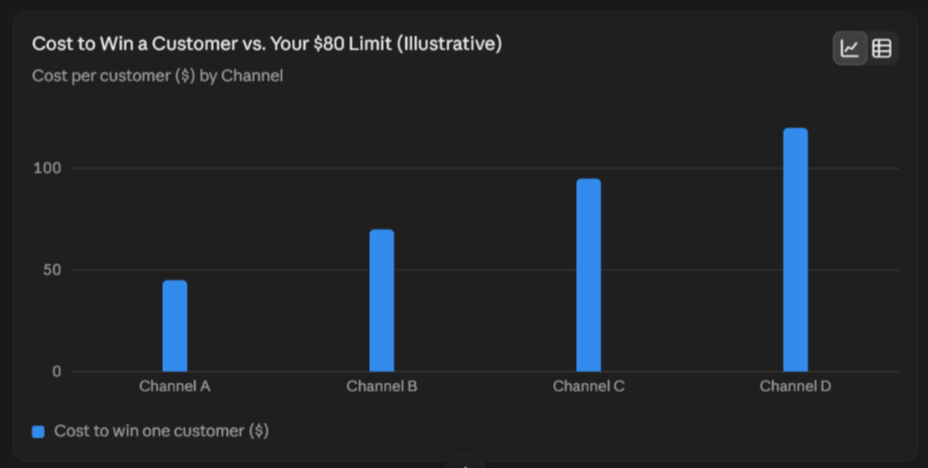
Pick one goal for the next 90 days. It could be leads, sales, awareness, or repeat customers. Never choose all four at the start.
After that, do one piece of math before you look at any channel:
Average order value x gross margin x expected purchases = The most you can spend to win a customer
For instance, an $80 order at a 50% margin, bought twice, gives you $80. Spend more than that per customer, and you lose money.
Use a simple test for every channel. Check if the channel can bring in a customer for less than your number. If not, cross it off.
#2: Check If Anyone Is Searching for You
Digital marketing channels do one of two jobs. They either capture demand that already exists (search ads, SEO, marketplaces) or create demand where none exists yet (social, video, outreach).
Run this five-minute test. Type your product into Google and check three things:
- Autocomplete: Does Google finish your phrase?
- “People also ask”: Are there related questions?
- Ads: Are competitors paying to show up?
If you see all three, people are searching, and capture channels will work. If you see none, skip SEO and search ads for now and lean on channels that create demand.
Want proof? Check Google Trends (free) to see if interest in your product is rising or fading.
However, if buyers describe the problem differently from you, weak search demand may also point to a product positioning problem rather than a bad marketing channel.
#3: Run the Customer Autopsy
Before you spend a cent, look at the customers you already have.
Take your last 10 customers and write down how each one found you. What did they search? Who referred them? What did they see first?
Patterns show up fast, and they beat any generic advice, because this is your data.
Then make it permanent.
Add one question to your forms, checkout, or calls: “How did you hear about us?”
A free Google Form on your thank-you page usually does the trick. The whole autopsy takes about an hour, and it will tell you more than most business marketing guides.
Those answers can also sharpen your product marketing, because they reveal which messages and acquisition paths actually moved buyers.
#4: Count the Real Costs
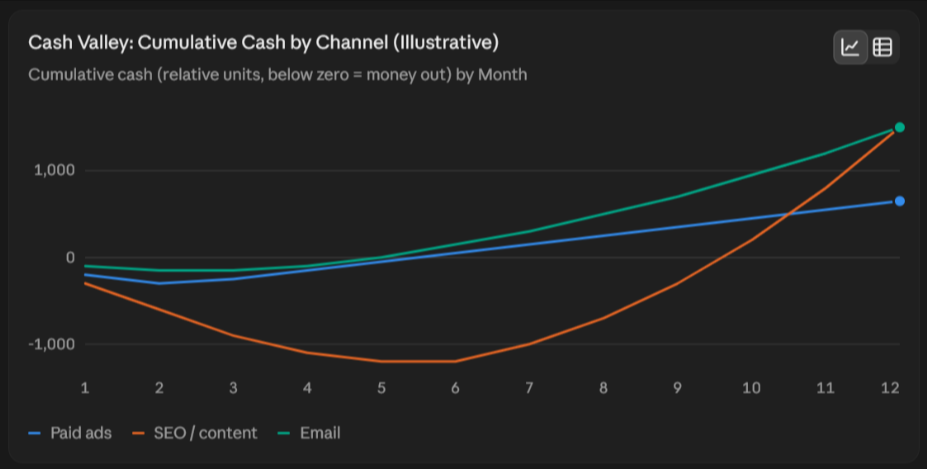
Most guides rank channels by ROI (Return on Investment). However, we’ll be taking a different approach, one that has worked wonders for us.
Ask yourself: how long can you stay underwater? (or bleed in business terms)
If we talk about paid ads, they dip shallow, but recover fast. As for SEO, it sits in the red for months before it climbs. It means if you need cash in the next 60 days, a slow channel can sink you, but work amazingly for the long term.
Make sure to check your calendar too. Every channel costs hours, even the “free” ones. List the weekly time each one needs against the hours you actually have.
On average, small businesses run two channels well. When they try managing five, it almost always falls apart fast.
#5: Pick Channels You’ll Still Be Doing in Month 11
Digital marketing channels rarely fail because they don’t work. They fail because the owner quits. So match the channel to what you can stand doing for a year, for example:
| If You Hate… | Avoid | Consider |
|---|---|---|
| Being on camera | Video-first channels | Search, email, written content |
| Writing | Blogging | Video, podcasts, partnerships |
| Waiting for results | SEO as your only channel | Paid search, outreach |
| Spreadsheets | Complex paid campaigns | Email, referrals, local listings |
After this, score your shortlist from 1 to 5 on audience fit, cost, speed to results, and your own skills. Highest total wins. (Duh!)
Just remember, the best channel is the one you’ll still be doing in month 11.
#6: Spy on Competitor Profits for Free
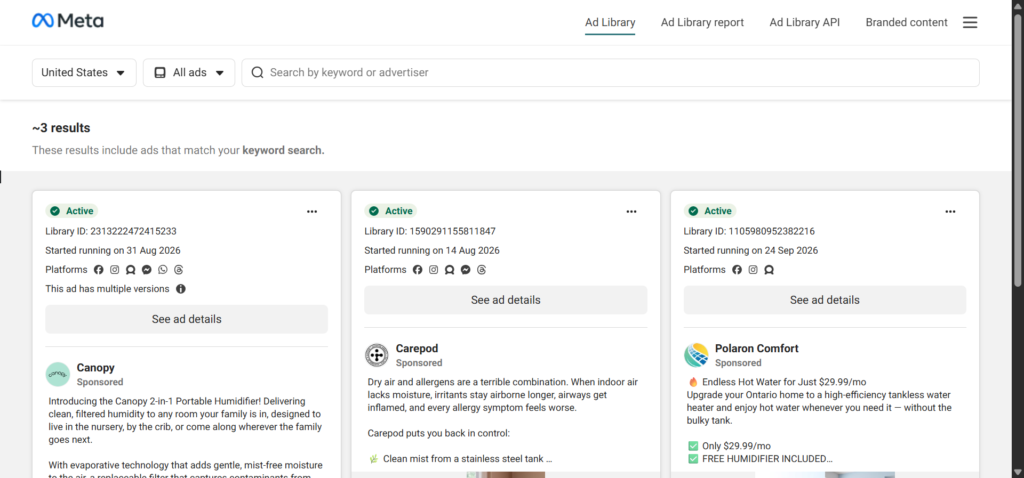
Here’s a free trick most owners never use. Open the Meta Ad Library (it’s public), search a competitor’s name, and look at the start dates on their ads.
If you see an ad running for months, it is probably earning its keep, because nobody keeps paying for a loser. Note the offers, angles, and formats that stick around.
Also check Google’s Ads Transparency Center (free) to see what competitors run on search and YouTube.
This way, you get a free look at what’s working in your niche before you start spending anything.
#7: Test Two Channels for 90 Days, With Kill Criteria
Start with just two channels. Before you spend anything, write down your kill criteria, such as: “If a channel hasn’t hit X by day 90, we stop.” Deciding in advance keeps you from throwing good money after bad.
Set up tracking on day one:
- UTM tags on every link
- One conversion event (a purchase, a call, a form)
- One spreadsheet to log results weekly
Tracking matters because the goal is to track qualified leads, not just clicks and likes.
With the emails you already have, start a list and email them offers regularly. And remember, platforms can change their algorithms or ban your account overnight, but your list stays yours, forever.
Quick Business Marketing Strategy by Business Type
If you don’t know what else to do, the table below will give you a solid starting point. Adjust them with your Customer Autopsy results for the best outcome.
| Business Type | Start With | Add Later | Skip for Now |
|---|---|---|---|
| Local service | Google Business Profile, local search ads | Email, review requests | Broad social ads |
| E-commerce | Paid social, email | SEO, content | Heavy blogging |
| B2B / SaaS | LinkedIn, outbound, search ads | Content, SEO | Consumer social ads |
| Consultant / freelancer | Referrals, LinkedIn | Email newsletter | Paid ads |
The “skip” column matters most. Saying no to a channel for 90 days frees up the time and money to do your first two properly.
Still Stuck Between Five “Good” Options?
Even if you have the right filters, choosing the right digital marketing channels can get messy fast. Sometimes two channels look equally good, but you don’t have the hours to test them properly.
This is usually the point where owners either spread thin or quit too soon. You can fill this gap with a second set of eyes, like a digital marketing agency or someone who understands business marketing and has real case studies to show for it.