
The best free VPNs should give you real privacy and security without forcing you into a paid subscription. But with so many free VPN apps available, knowing which ones are actually trustworthy can be difficult. Some free services also come with strict data caps, limited server choices, or privacy trade-offs that aren’t obvious at first glance.
In fact, for people searching for these tools, privacy is one of the main reasons, which is why 31% of internet users use a VPN each month, as per DataReportal. That makes it even more important to choose a provider with clear privacy practices.
With that in mind, let’s compare the seven reliable free VPNs for 2026. This way, you can quickly see which option fits your needs, along with the limits and privacy trade-offs to know before installing one. Here is a quick verdict on the VPNs we compared ahead.
| VPN | Best For | Why It Stands Out | Main Limitation |
|---|---|---|---|
| Proton VPN | Privacy + unlimited data | Unlimited bandwidth, no intrusive ads, and a strong privacy-focused setup | Fewer server choices on the free plan |
| Windscribe | More free server locations | Good server variety and useful streaming support | 10 GB monthly data allowance |
| TunnelBear | Beginner-friendly use | Simple interface and easy setup | Only 2 GB of free data per month |
| PrivadoVPN | Occasional streaming | Streaming-friendly and offers solid privacy protections | 10 GB monthly data limit |
| Browsec | Simple browser use | Unlimited traffic and no account required | Only 4 free server locations |
| Hide.me | Censorship-heavy regions | Designed to work reliably in more restrictive environments | Limited free-plan usage |
| ZoogVPN | Simple lightweight option | Easy to set up and straightforward for new users | Fewer features on the free plan |
7 Best Free VPNs in 2026
There are several free VPN providers that stand out for their transparency, security standards, and consistent performance.
While free plans come with certain limitations, these options offer reliable encryption, clear privacy policies, and trustworthy reputations. Below are the seven best free VPNs that balance safety, speed, and usability without compromising user privacy.
1. Proton VPN
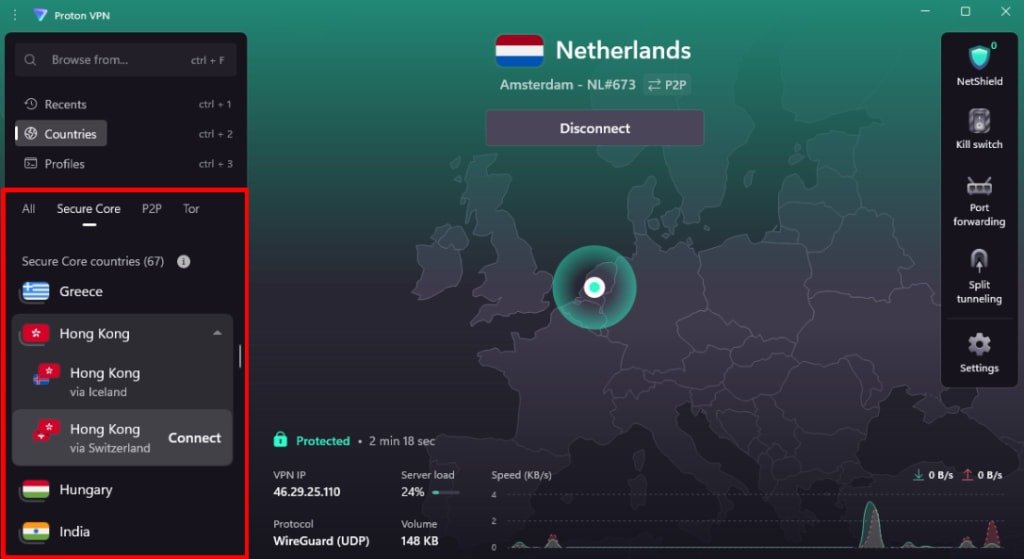
Proton VPN offers unlimited data on its free option, making it stand out from the competition. That makes it especially useful if you want a free VPN for regular browsing and don’t want to keep checking a monthly data allowance.
It also focuses heavily on privacy, with strong encryption, a no-logs policy, and no intrusive advertising on the free plan. The main trade-off is choice: free users have access to fewer server locations than paying users.
Key features:
- Unlimited bandwidth with no throttling
- No-logs policy
- No intrusive ads
- Strong encryption for private browsing
2. Windscribe
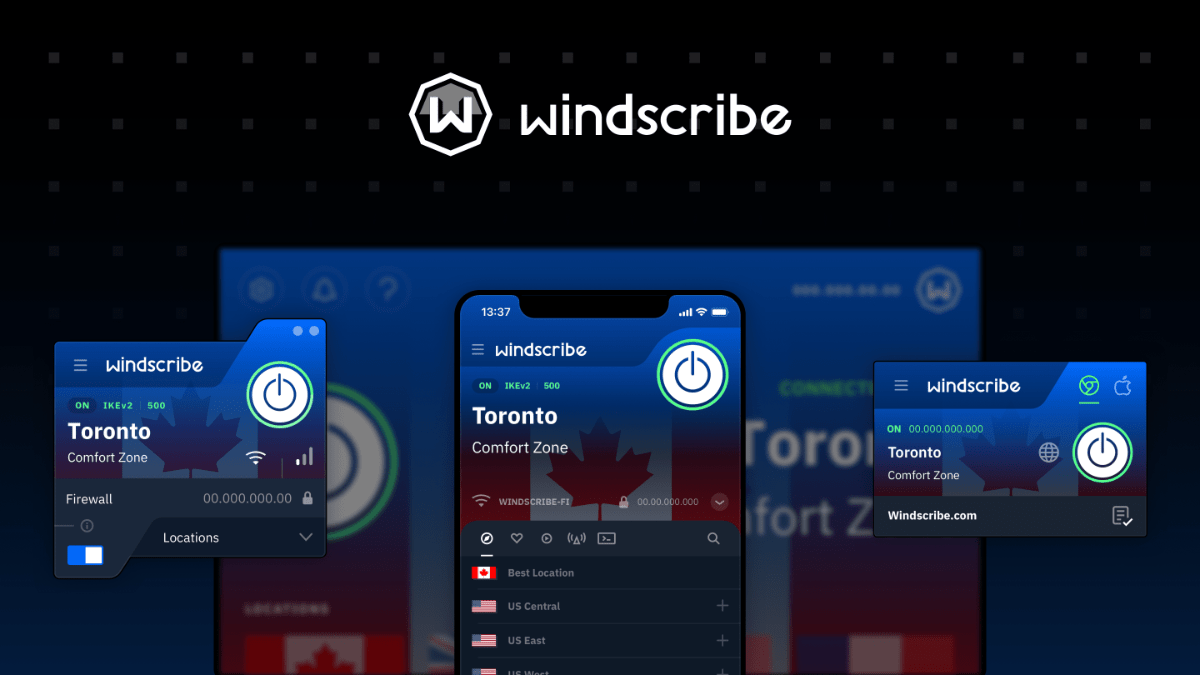
Windscribe is the most reliable performer and most open provider of a free VPN. Its free plan gives users access to servers in more than a dozen countries, which gives you more location flexibility than many other free VPN plans.
It can also work with several streaming platforms and includes clear privacy practices. The main thing to watch is the monthly data limit, so it works better for browsing and occasional streaming than constant high-bandwidth use.
Key features:
- 10 GB monthly data allowance
- Free servers in multiple countries
- Secure encryption and firewall technology
- Supports several streaming platforms
3. TunnelBear
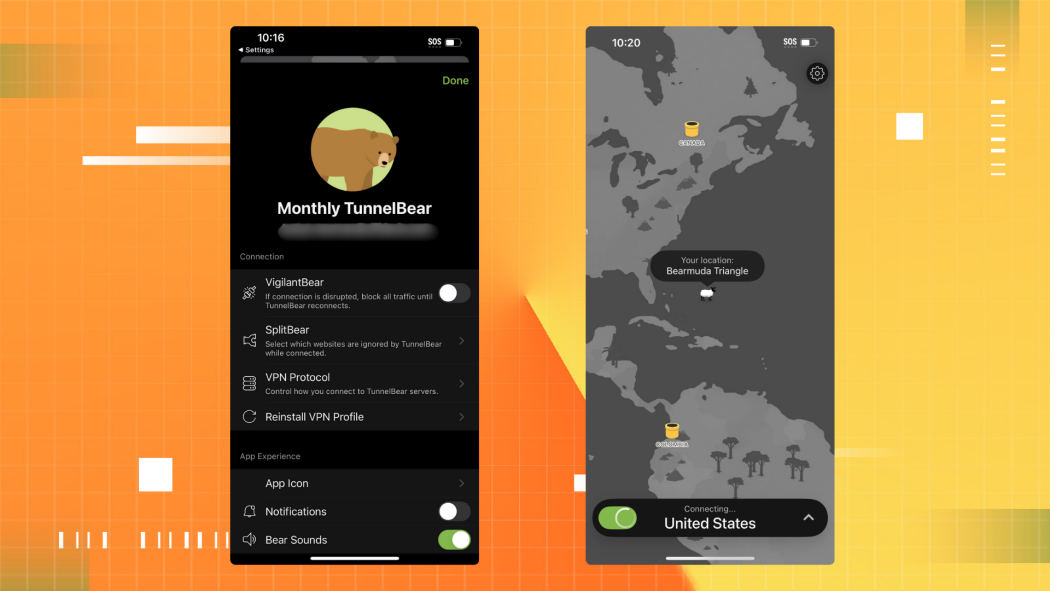
TunnelBear has built a solid reputation for openness and independent audits. Its simple interface makes it one of the easier free VPNs to understand if you’ve never used a VPN before.
The free plan also gives access to servers across many countries, but the 2 GB monthly allowance is restrictive. It’s better suited to occasional browsing, testing a VPN, or securing a short public Wi-Fi session than daily heavy use.
Key features:
- Beginner-friendly interface
- Access to servers in 45+ countries
- Independent security audits
- Simple setup across supported devices
4. PrivadoVPN
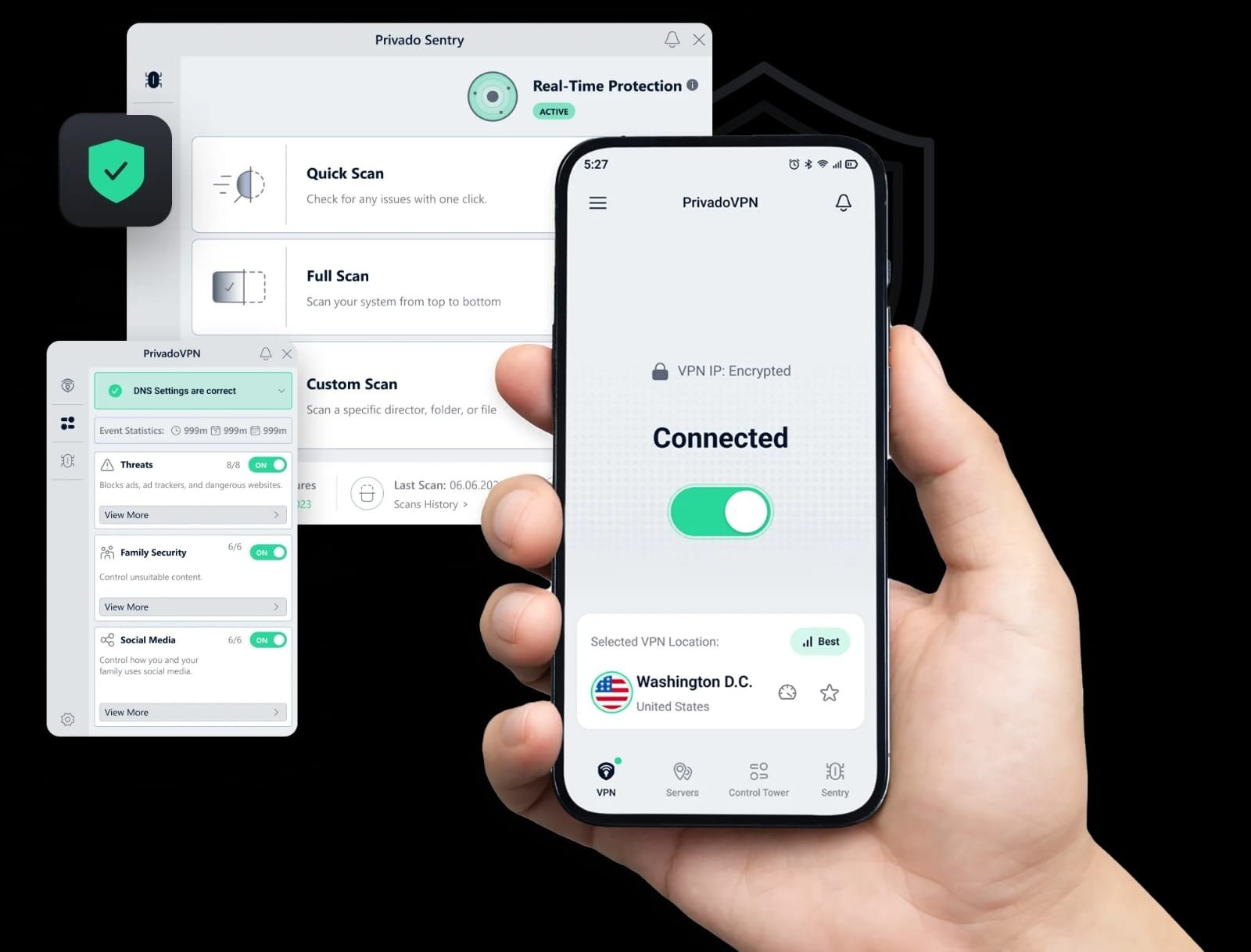
Privado VPN is Switzerland-based with strong privacy legislation to protect it. It combines a straightforward free plan with secure encryption and support for streaming, which makes it useful for people who want more than basic browsing protection.
Its free plan comes with a 10 GB monthly data allowance, so heavy streaming can use that allowance quickly. For occasional streaming or everyday browsing, though, the combination of privacy protections and streaming support makes it a practical option.
Key features:
- 10 GB monthly data limit
- Streaming-friendly free plan
- Secure encryption
- Clear privacy protections
5. Browsec
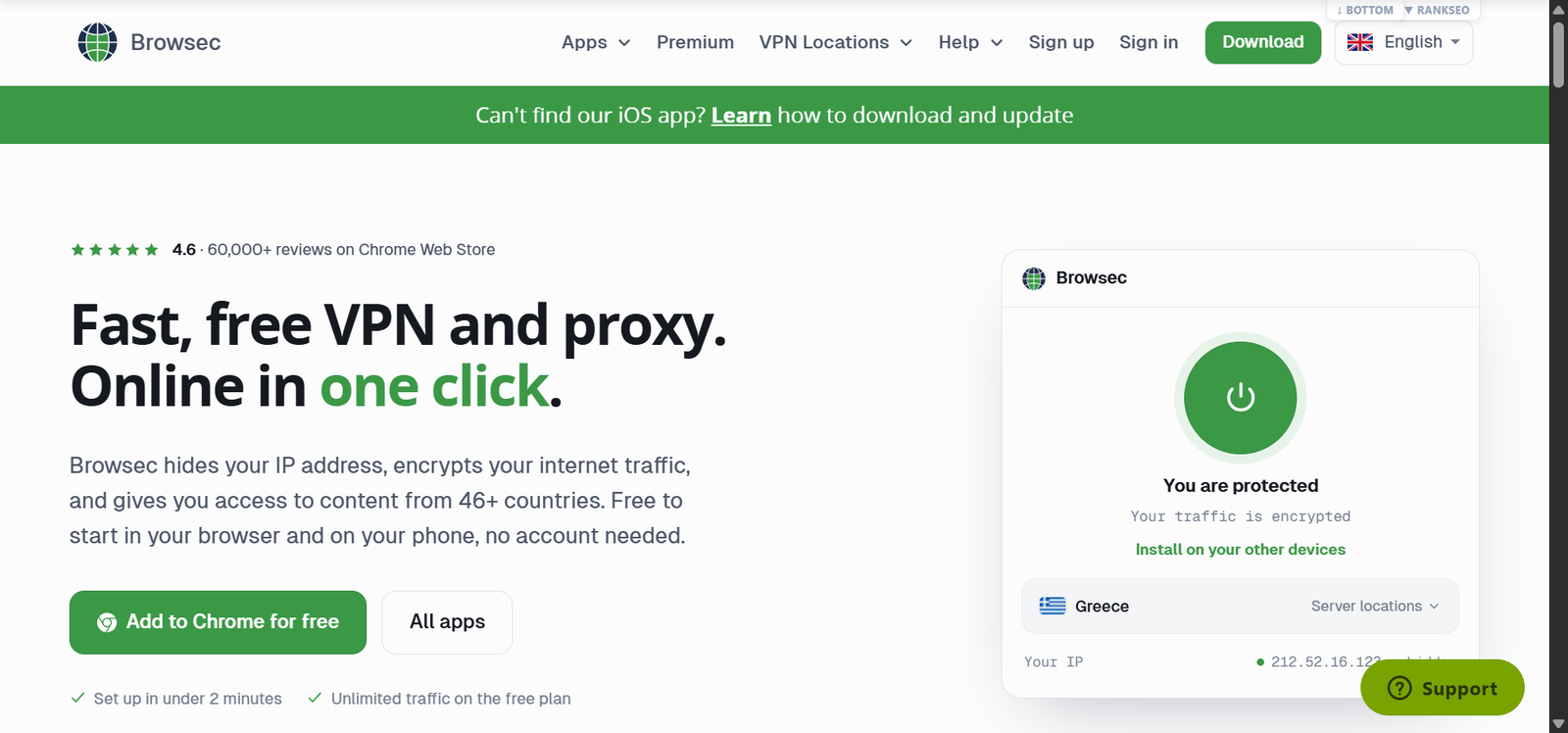
Browsec is a lightweight VPN that’s easy to start using, especially if you mainly want protection inside your browser. Its free plan includes unlimited traffic, no ads, and access to four server locations without requiring an account or payment details.
It’s available as a browser extension and on mobile, which makes it useful for quick everyday browsing or public Wi-Fi. The trade-off is that free users get fewer locations and standard speeds, while the wider server network and faster connections are reserved for Premium.
Key features:
- Unlimited traffic on the free plan
- No account required
- No ads
- 4 free server locations
6. Hide.me
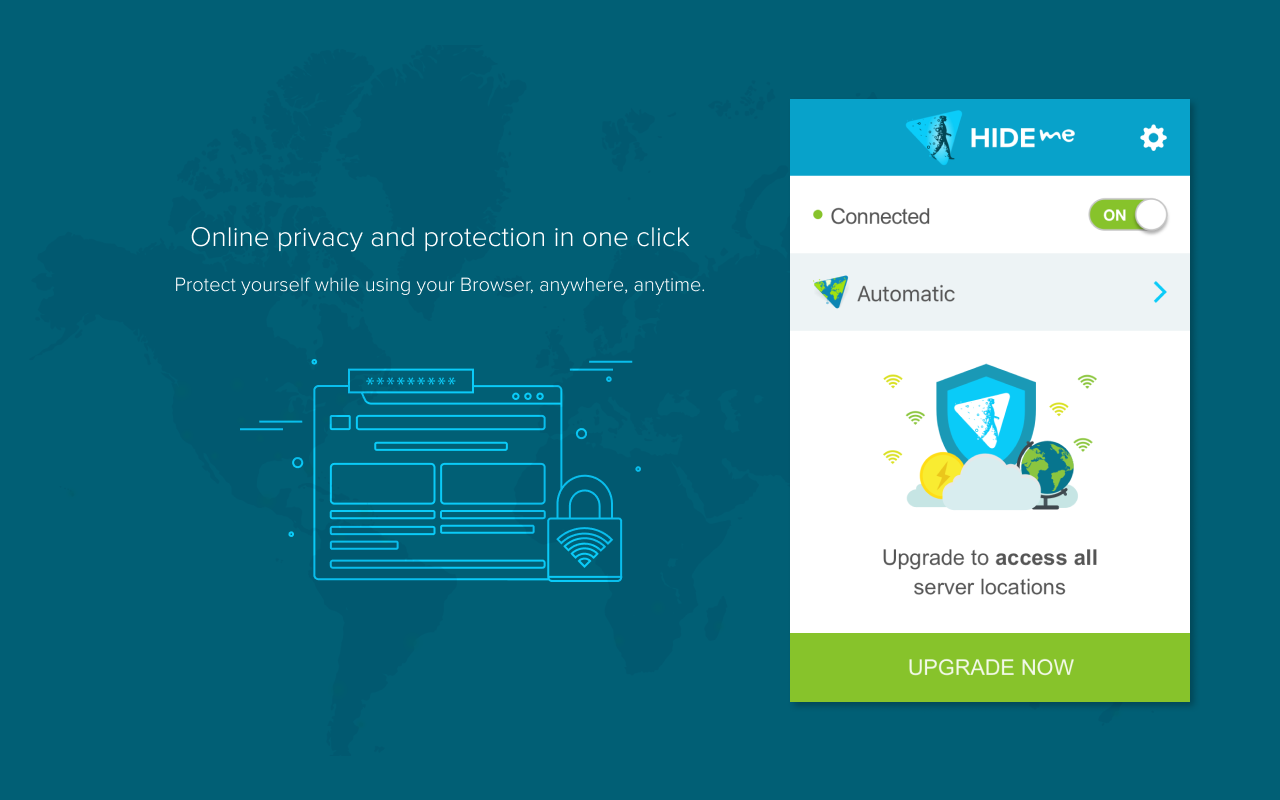
Hide.me is among the few free VPNs that consistently works in countries with high levels of internet censorship. That makes it particularly useful for people who need additional privacy or access in more restrictive online environments.
Its security practices are also audited regularly, which adds an extra layer of transparency when evaluating the service. The free plan has usage limitations and is not the strongest choice for high-quality streaming, so its main appeal is privacy and access rather than entertainment.
Key features:
- Works in more restrictive online environments
- Regular security audits
- Privacy-focused protections
- Free plan available for light use
7. ZoogVPN
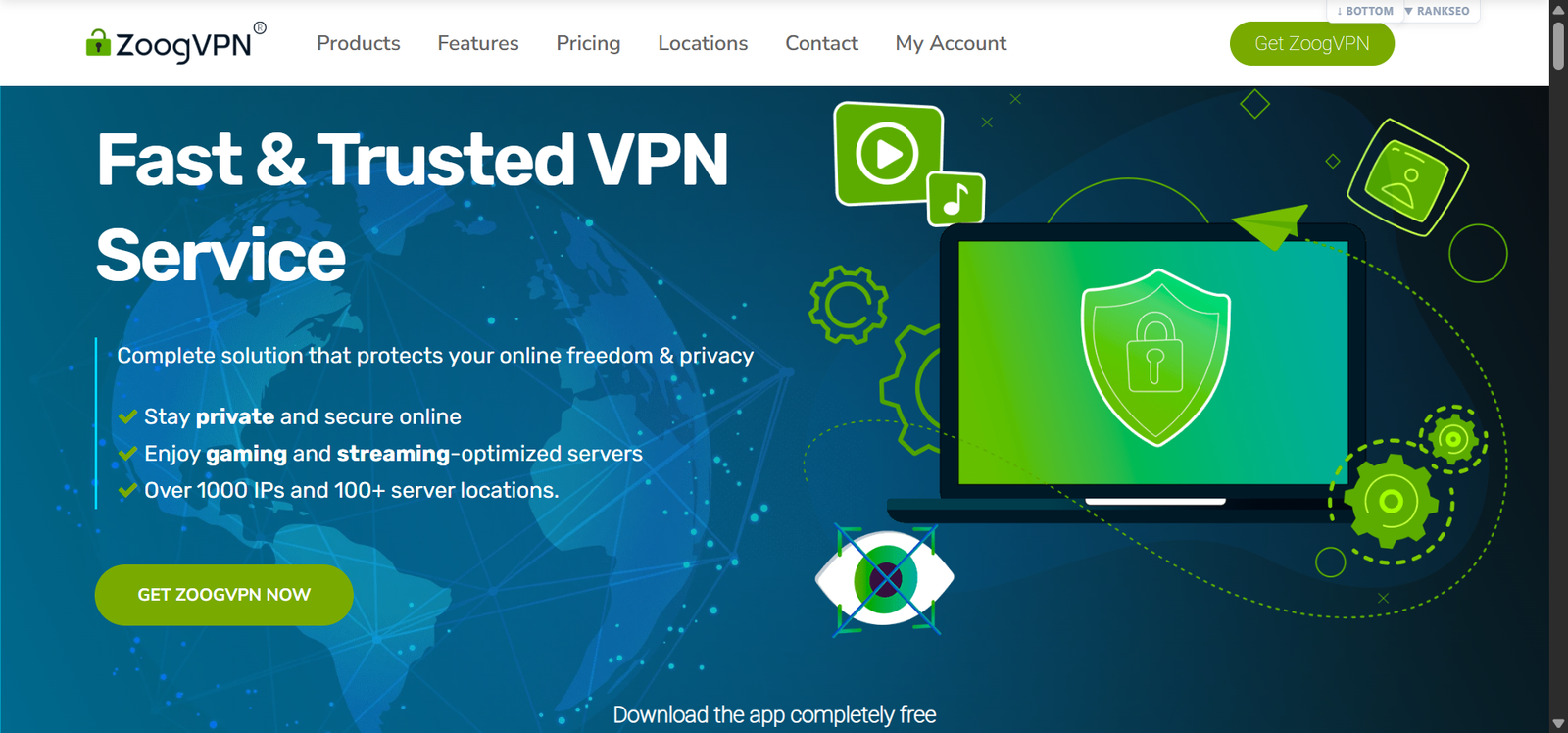
ZoogVPN is light, simple, and easy to use, making it a perfect VPN for newbies. Its straightforward setup makes it suitable for users who want basic VPN protection without dealing with a complicated interface or lots of advanced settings.
It also uses strong encryption and follows clear privacy practices. The trade-off is that the free plan includes fewer features, so more advanced users may find it restrictive compared with the other options in this list.
Key features:
- Easy setup for beginners
- Lightweight and simple interface
- Strong encryption
- Clear privacy practices
What Should You Look for in a Free VPN?
A free VPN can still be safe, but you should know what you’re getting before installing one. The biggest differences usually come down to privacy, transparency, and the limits placed on the free plan.
Before choosing a free VPN, check these five things:
- Privacy Policy: Make sure the provider clearly explains what data it collects, stores, or shares.
- Encryption and Protocols: Look for strong encryption and modern VPN protocols that protect your connection.
- Company Ownership: You should be able to identify the company behind the VPN and where it operates.
- How the Free Plan Makes Money: Be cautious if the service relies heavily on ads or unclear data monetization.
- Independent Audits or Security Reviews: Third-party audits and public security reviews can help verify a provider’s privacy and security claims.
Free VPN vs. Paid VPN: What’s the Difference?
Free VPNs can be enough for light browsing, occasional public Wi-Fi use, or anyone who only needs basic privacy protection. The main trade-off is that free plans usually come with more restrictions, such as fewer server locations.
Paid VPNs are generally better suited to people who use a VPN regularly, stream often, or want more control over servers and privacy features. Services such as NordVPN offer faster connections, unlimited bandwidth, and more advanced features.
The table below compares free and paid VPN based on cost, limits, and other features.
| Feature | Free VPN | Paid VPN |
|---|---|---|
| Cost | No subscription required | Monthly or yearly subscription |
| Data limits | Often limited, although some providers offer unlimited data | Usually unlimited |
| Server choice | Fewer locations and less control | Wider global server network |
| Speed | Can be slower or more restricted | Usually faster and more consistent |
| Streaming | May work with some services | Generally better for regular streaming |
| Privacy features | Core protection with fewer advanced tools | More advanced privacy and security features |
| Best for | Light browsing and occasional use | Frequent VPN use, streaming, and broader protection |
Quick Takeaway: If you only need a VPN occasionally, a reputable free plan can be enough. If you use a VPN every day or rely on it for streaming, faster speeds, and more server locations, a paid VPN is usually the more practical choice.
Which Free VPNs Should You Avoid?
Not every free VPN is worth installing. Some services have faced criticism over privacy practices, weak protections, or unclear data handling, so it’s worth being selective rather than choosing purely by ratings or download numbers.
Some of these include:
- Hola VPN
- Turbo VPN
- Betternet
- VPN Proxy Master
However, not every version of these apps is automatically unsafe. I’d still avoid recommending them unless their current privacy practices, ownership, logging policies, and security protections have been checked carefully.
How Do Free VPNs Make Money?
Free VPN services still need money to run servers, maintain apps, provide support, and keep their infrastructure secure. The most common model is freemium, where the provider offers a free version with limited features and encourages users to upgrade to a paid plan.
Some free VPNs also make money through advertising or data monetization. This is where users need to be careful, because a service that depends heavily on user data may collect more information than expected.
A trustworthy free VPN should clearly explain how it makes money and what data it collects. If that information is vague or difficult to find, it is better to choose another provider.
Related Link: How to Turn Off VPN on Android? Step by Step
Final Thoughts
The best free VPN depends on what you need most. Proton VPN is a strong choice for privacy and unlimited data, while Windscribe offers more flexibility with free server locations. TunnelBear is easy for beginners, and PrivadoVPN can work well for occasional streaming.
Free VPNs are useful for light browsing, public Wi-Fi, and basic privacy, but they usually come with limits on data, servers, speed, or features. Choose a provider with transparent privacy practices, strong security, and a clear business model rather than picking one based on price alone.
To explore more insights like this, visit our Cyber-security Page. If you’re passionate about tech, networks, and digital infrastructure, Write for Us and share your voice with our audience.
Best Free VPNs FAQs
What Is a VPN (Virtual Private Network)?
A VPN, or Virtual Private Network, is a secure system that creates an encrypted tunnel from your computer to the internet. The encryption hides your IP address and online activity, making it harder for anyone, such as advertisers, hackers, or even your internet service provider, to track or see what you do on the net.
A VPN also enables you to evade geo-restrictions, visit censored websites, and use public Wi-Fi networks securely. Paid VPNs offer more robust security functions, yet a few free VPNs can provide elementary protection if chosen wisely.
What Makes a Free VPN Safe?
A safe free VPN should clearly explain what data it collects, how the service is funded, and what security protections it uses. Look for a transparent privacy policy, modern encryption, reputable ownership, and independent security audits where available.
Be cautious with free VPNs that request unnecessary permissions, display excessive ads, or provide no clear explanation of how they make money.
Is It Safe to Use a Free VPN?
Yes, a free VPN can be safe if it comes from a reputable provider with strong encryption, a clear privacy policy, and transparent data practices. The biggest risk is choosing an unknown service that makes money through excessive advertising or collecting user data. Stick with established providers and check what information the VPN stores before installing it.
Can a Free VPN Unblock Streaming Sites?
Yes, sometimes. Free VPNs can work with streaming platforms, but they are usually less reliable than paid VPNs. Streaming services also regularly block known VPN servers. Proton VPN, for example, does not block streaming on its free plan, but it only guarantees access to supported streaming services on paid plans.
What Is the Most Secure Free VPN?
Proton VPN is one of the strongest privacy-focused free VPN options. Its free plan includes a no-logs policy, no ads, strong encryption, and unlimited data. Other reputable free VPNs also provide good protection, so the right choice depends on whether you value unlimited data, more server locations, streaming, or ease of use.
Does a Free VPN Protect You on Public Wi-Fi?
A VPN can make public Wi-Fi safer by encrypting the connection between your device and the VPN server. This makes it harder for someone on the same network to monitor your internet traffic. However, a VPN does not protect you from phishing websites, malicious downloads, scams, or every type of malware.
Do Free VPNs Slow Down Your Internet?
They can. A VPN has to encrypt your traffic and route it through another server, which can slightly reduce your internet speed. The amount of slowdown depends on factors such as server distance, server congestion, your original connection speed, and the VPN provider. Free servers can sometimes be busier because more users share them.
What Does a 10 GB Free VPN Limit Mean?
A 10 GB limit means you can transfer up to 10 GB of internet data through the VPN during the provider’s billing period, usually one month. Once the limit is reached, the VPN may stop working or restrict your connection until the allowance resets.
Can You Use a Free VPN Every Day?
Yes. There is nothing wrong with using a reputable free VPN every day if its limits suit your needs. However, for everyday use, an unlimited-data plan is much more convenient. If your VPN has a small monthly data allowance, regular streaming, downloads, or keeping the VPN connected all day can use that allowance quickly.