
Did You Know? 96.98% of webpages get no organic search traffic from Google meaning almost all newly published pages never attract real visitors if they aren’t optimized properly.
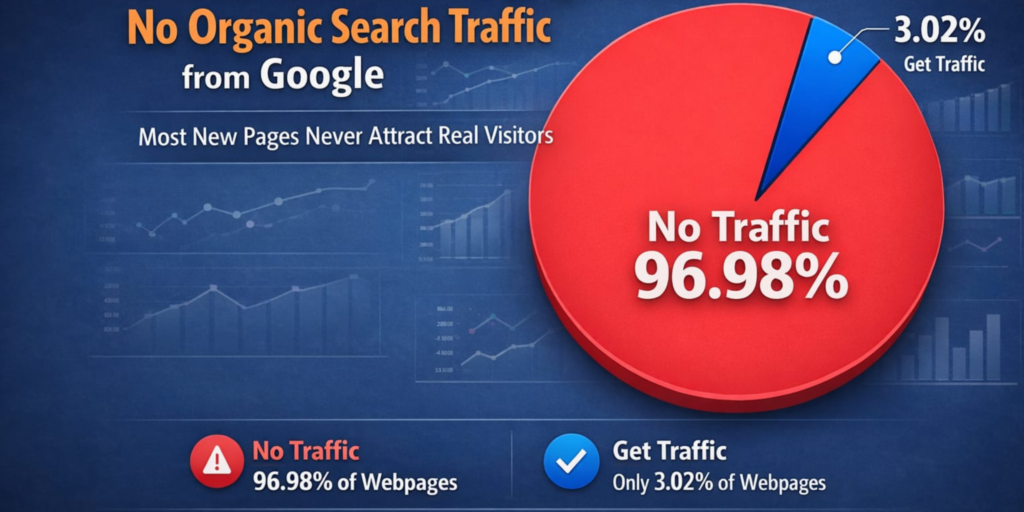
Before chasing the first page of Google, every business website, blog, or online store must accept one truth: most web pages receive zero traffic. Research by Ahrefs, shows that the vast majority and a huge percentage of pages are never seen in search results by any real visitor. That is why many website owners, especially when starting from scratch with a new website or launching an online business as a solopreneur, struggle to gain traffic, clicks, and customers.
A few smart creators study the SEO game, learn to understand SEO, and apply practical, step-by-step methods from trusted resources like Google’s SEO Starter Guide. Instead of random posting from scratch, they build focused content, follow clear SEO strategies, and refine real strategies to compete with strong competitors in B2B and SaaS markets.
This article will explain the actual steps required for ranking high, growing organic traffic, and turning visibility into long-term results using a structured guide built for 2026.
Rank a New Website Fast-The Short Answer
If you want to rank a new website faster, start by picking keywords you can realistically win, usually low-competition, high-intent searches instead of broad terms. Create content that clearly answers what people are looking for and reflects real experience, not just theory. Make sure your site is technically solid with clean URLs, HTTPS, and good Core Web Vitals, following best practices from Google Search Central. Then focus on earning quality backlinks, strengthening internal links, and building genuine brand mentions. When authority, trust, and useful content work together, rankings grow more naturally and stay stable.
5 Essential Steps to Rank a New Website Fast in 2026
Launching a new website can feel overwhelming, but following a clear SEO plan makes ranking faster and more predictable. These five proven steps will guide you to build authority, attract traffic, and grow sustainably in Google search.
Step 1: Smart Keyword Mapping Before You Publish
Many site owners rush to publish. That is a mistake. Keywords are the true backbone of SEO, and if you choose the wrong keywords, you will struggle to rank no matter how good your design looks. Start with free tools like Google Keyword Planner, Ubersuggest, and SEMrush, which provide data on search volume, competition, and trends.
Instead of chasing broad terms like website design, shift your focus to long-tail keywords such as affordable website design in Lagos. These usually have low-competition keywords difficulty and a decent search volume, making them easier for a new website to penetrate.
I have seen new brands grow faster when they align content with their ranking potential instead of guessing. Add closely related keywords and semantic keywords naturally in your content so it reads smoothly and supports context. When you target the right terms, your site can rank well for your target keywords and even get noticed in crowded markets. When you ignore this step, your website owner’s mindset turns reactive, not strategic.
The simple truth is this: if you are starting out, choose keywords that bring business value, match your authority level, and sit within realistic competition. That single shift often separates silent pages from pages that steadily rank and convert.
Step 2: Experience-Driven Content That Google Trusts
In 2026, Google rewards pages that Match User Intent Precisely. That means clear search intent alignment, direct answers for an informational query, and strong CTAs for a transactional query. This is not a theory. It comes from verifiable real-world experiences and tested SEO campaigns. Strong ranking content starts with a sharp content definition, tight content relevance, and deep focus on user intent. Every paragraph should feel like a practical guide, not a random blog.
Use a clear step-by-step process, but when needed, shift tone into a soft sales pitch for service pages. Always give precise answers. Build user-focused content that solves real problems, not just fills space. To win long term, Use Real Expertise and Experience. Add client examples, short case studies, and proof of real results.
Share practical examples from projects where AI-generated content was improved with human edits to increase authenticity signals and expertise signals. Show real-world proof through screenshots, data, and outcome comparisons. This builds content credibility and trust. Add simple Charts, Screenshots, and Visuals to improve user retention and dwell time.
A small Comparison Tables section can boost content engagement and overall, SEO performance. Smart interactive elements improve user experience and keep visitors longer. Publish Original Ideas, fresh new data, and mini original research to earn natural backlinks. This creates SEO authority, strong content value, and steady organic growth. For a newborn website, follow a clear publish roadmap with a clear publishing schedule:
- Month 1 focus on Core pages and the first few blogs;
- Month 2 add In-depth articles and local SEO pages;
- Month 3-4 release Case studies, data content, and videos.
This natural progression shows active publishing, and history proves that Google rewards continuous progression when quality stays high.
Step 3: Strengthen Your Technical SEO Foundation
Start with short URLs and clean URLs because a clear URL structure helps both search engines and users understand your pages quickly. Make your site fully HTTPS since website security is a confirmed ranking factor, and even Google recommends secure connections in its documentation. Then focus on Core Web Vitals, especially LCP, INP, and CLS, as they directly impact search rankings and reflect load time, interaction speed, and visual stability.
Strong mobile responsive design and optimized mobile performance matter because most users and even AI search engines evaluate sites on mobile first. Improve page speed to avoid being grouped with slow websites, which struggle to rank, especially new websites trying to build trust.
Add structured data using Schema markup like Organization schema, Local Business schema, FAQ schema, and Article schema to improve search visibility and boost click-through rates, as supported by official guidance from Google Search Central. In 2026, ignoring technical SEO, weak crawling, poor content structure, and hidden technical issues can slow growth, but aligning every element with practical 2026 SEO standards create a stable base for long-term performance and a smoother user experience.
Step 4: Build Authority with Smart Backlink Strategies
To rank a new site in 2026, focus first on high-quality backlinks where quality and relevance matter more than volume. Strong SEO today rewards trust, not shortcuts. When you publish original research backed by original datasets, you build real authorship that attracts natural backlinks from journalists and bloggers, a method supported by industry studies from platforms like Backlinko and Google Search Central. Smart guest posting on reputable, niche-specific sites still works if you add value.
Always compare competitor backlinks, study who is linking, and reach out with better resources. Tools like Semrush Backlink Gap Tool help uncover missed opportunities where competitors are ahead. Long-term gains come from real relationships with industry leaders, influencers, and local businesses, leading to steady long-term returns instead of short spikes.
At the same time, strengthen your base with clean on-page structure for both human users and robots. Optimize title tags to be clear, keyword-oriented, and compelling. Write high-impact meta descriptions that improve ranking signals indirectly by increasing and influencing clicks. Use extensive internal linking to create paths that strengthen topical authority and help search bots crawl the website efficiently. Add proper alt text descriptions to images to stay accessible and become more visible in search. Keep short slugs and simple URLs with readable words.
Prevent keyword stuffing because modern-day search engines can penalize over-optimization. Use smart tools like Semrush On-Page SEO Checker for targeted suggestions and continuous improvements based on data. You can also use free blogging platforms like Medium or Blogger to get free high-authority backlinks.
Step 5: Work to Earn Brand Signals Across the Web
To improve ranking for a new website in 2026, focus first on brand mentions because modern search engines and AI assistants rely on entity signals, not just links. According to Google’s Search Central documentation, building a clear and consistent presence improves trust and visibility, while industry studies from Semrush highlight how authority signals influence performance.
Strong backlinks still matter, but unlinked mentions across searchable community platforms like Reddit, Quora, LinkedIn, and relevant niche forums also increase branding exposure and AI mentions, especially as built-in AI features summarize trusted sources.
Smart digital PR campaigns targeting relevant publications help secure editorial coverage. Publishing data-driven original content, including surveys and reports, increases citation potential. Tools like AI Visibility Toolkit by Semrush can track how brands appear inside AI assistants and evolving search engines. At the same time, strengthen brand trust through positive Google reviews, which improve local ranking potential.
These trust-building approaches work best when supported by strong SEO fundamentals, an impeccable technical base, a genuine identity, proven expertise, and you update content regularly.
Combine this with fast hosting and dependable hosting to ensure crawl efficiency and user satisfaction. In practice, brands that align credibility, technical strength, and smart outreach see faster visibility growth even in competitive spaces.
Takeaways

Real success starts with a strong foundation, not shortcuts. Data from Ahrefs shows most pages get no traffic, which proves smart planning and proper SEO matter from day one. When launching a new website, focus on strategy, reduce technical errors, and be ready to invest in reliable hosting with built-in support. Strong systems help you rank faster, even in tough competition. These five steps work best when executed consistently and backed by solid infrastructure!
Check out our Digital Marketing Page, for more expert tips and guides. If you’d like to work in AI and SEO, submit your guest post and Write for Us.
FAQs
How long does it take to rank a new website in 2026?
Usually 3–6 months for low-competition keywords. Competitive terms can take 6–12 months or longer. Consistent content and solid SEO speed things up.
What matters most for ranking fast?
Choosing the right keywords and matching search intent. Helpful content plus strong technical basics, following guidance from Google Search Central, makes the biggest difference.
Can a new site rank without backlinks?
Yes, in low-competition niches. But in competitive markets, authority helps. Mentions on platforms like Reddit and LinkedIn can improve trust and visibility.