
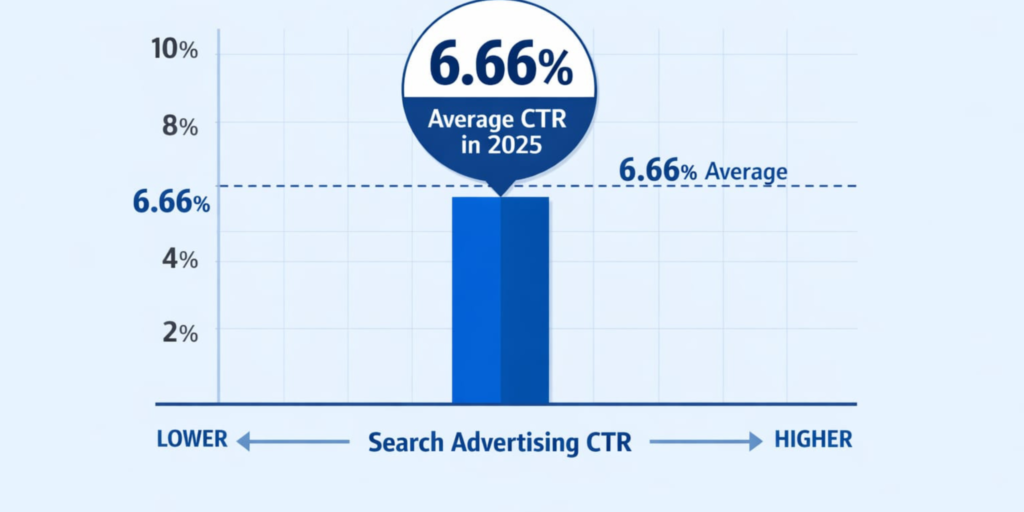
Did You Know? The average click-through rate (CTR) for search advertising across industries in 2025 is 6.66%, showing how clickable your ads should aim to be if they’re relevant and well-targeted.
A slow start in marketing campaigns feels like a former runner facing early frustration, but a low click-through rate (CTR) is not failure. It just slows progress. In search marketing, CTR is a critical metric because it measures awareness, engaging, and action across the buyer’s journey. When users are noticing your ad, they decide within seconds whether to click and move toward converting into a customer. If your low CTR blocks users from advancing stages, your goals become harder to reach. Google explains that ad relevance and expected CTR directly affect performance.
That is why you must measure, analyze, and structure every small business marketing campaign like a practical guide, treating search results as the racecourse of your marketing efforts, not just traffic numbers. Weak signals such as poor targeting or weak creative often cause stumbling off the starting line, but smart campaign adjustments and high-impact fixes help you boost CTR and get running smoothly toward success.
Fixing CTR starts by understanding its importance and the common reasons it drops in PPC campaigns, social media ads, and email promotions. Google’s documentation and industry research from WordStream show that relevance, keyword match, and strong copy influence results. That means your follow-up article strategy should not just explain CTR but apply practical fixes that align with search intent. Clear headlines support noticing your ad, strong value improves engaging, and focused offers increase chances of converting.
When messaging matches user intent, the campaign can finish strong instead of slow progress at the start. Treat each optimization like refining your stride on the racecourse. Small tweaks in targeting and creative create measurable lifts and help you finish marketing campaigns strong without inflating budgets.
Fix Low CTR in Google Search & Ads-The Short Answer
A low CTR shows your ads or listings aren’t fully matching user intent. Start by refining targeting to reach the right audience and strengthen creative elements like headlines, visuals, and CTAs to grab attention. Test everything with A/B experiments to find what works best. Optimize landing pages so they match ad promises and load fast. Finally, expand visibility and review platforms by adjusting budgets, targeting, and trying new channels to maximize impressions and clicks. Small, data-driven tweaks can turn low CTR into measurable campaign growth.
What is CTR? (click-through rate)
CTR, or click-through rate, shows how many clicks you get from your impressions. It is calculated using a simple formula: clicks divided by impressions count, then multiplied by 100 to get a percentage. These metric measures ad visibility, attention, and real engagement. A low CTR means people see your result but are not selecting it. A strong CTR shows positive audience response and better efficiency in converting impressions into action.
In a Google Ads or organic setting, CTR affects campaign performance, ad quality score, and even ad placements. According to the official guide by Google Ads and research from WordStream, higher CTR often improves relevance, lowers cost-per-click, and boosts overall performance.
5 Proven Ways to Fix Low CTR in Google Search & Ads
A low click-through rate (CTR) often means your listing is not matching search intent, even if it ranks well. According to Google and studies from Backlinko, higher CTR comes from strong relevance, clear titles, and compelling meta descriptions. The right improvements can turn impressions into meaningful clicks and better overall performance.
Step 1: Refine Targeting
Start with refined targeting. Many brands think broad reach helps, but overly broad targeting often reduces engagement. Use platform tools like audience segmentation to narrow demographics, interests, and behaviors. On Facebook Ads and Google Ads, features like custom audiences, lookalike audiences, and uploaded customer data help reach the right people. Define your ideal customer clearly. Align targeting criteria with the buyer’s journey. This improves enhanced CTR, builds momentum, and drives meaningful marketing results without guessing.
Step 2: Strengthen Creative Elements
Your ad, visuals, headlines, and calls-to-action (CTA) must capture attention fast. Clear and action-oriented lines like “Save 20% Today on Running Shoes” often outperform vague ones like “Check Out Our Store.” Use bold images, vibrant images, or short videos that match your brand consistency. Avoid overusing AI-generated content. Many users detect AI-created ads and see them as impersonal or cheap. Focus on human-centric content that feels authentic and relatable. Even small tweaks can spark curiosity, increase clicks, and boost shares.
Step 3: Test Everything
Then test everything. Run A/B tests and treat A/B testing as an iterative process. In Google Ads, Google PPC, or Meta Ads, create ad variations and start by testing one element only. Compare a direct CTA like “Buy Now” with a softer one like “Learn More.” Measure and compare CTR before making another change. Apply the winning element to the next ad iteration. Avoid changing too much at once. A change at a time helps identify what is truly driving improvement and what actually resolved low CTR issues.
Step 4: Optimize Landing Pages
Do not ignore the landing page. A mismatch between ad delivery and landing page affects quality score, higher costs, and poorer ad placement. Sending users to the homepage instead of a dedicated landing page is a common mistake. If your ad promises free shipping, the page must show it clearly. A fast page, mobile-friendly design, and action-oriented page layout increase conversion rate and overall conversion. This protects your CTR, keeps eyeballs engaged, and guides them toward a specific action.
Step 5: Expand Visibility and Review Platforms
Finally, look beyond the ad itself. Low impressions the number of times shown limit growth, no matter how strong the creative. Review ad budget, especially in competitive markets where visibility matters. Adjust targeting settings if narrow audience criteria, limited age range, tight geographic location, or restricted interest categories reduce reach. A sporting goods store targeting runners may also include outdoor enthusiasts and fitness buffs. Check impression reports, monitor placements, and refine bidding strategy.
If performance stalls, consider switch platforms. A B2B company may struggle on Instagram but thrive on LinkedIn Ads with active decision-makers. If Google search ads underperform, test Meta Ads across social media platforms, where detailed demographics and social media browsing behavior support discovery. Track CTR across channels. Study general searches versus passive scrolling. This broader view often unlocks advanced technical enhancements and new effective ways to address low CTR and support the entire marketing campaign.
Conclusion
Fixing low CTR is not luck. It feels like running a marathon. It needs preparation, focus, and readiness to adjust. In marketing campaigns, optimizing every step build momentum. Real success starts with understanding the essentials, pinpointing common issues, and applying practical fixes. You must review actual data, not guesses. CTR is one of the earliest indicators in the buyer’s journey. When it is low, it slows progress and affects the entire campaign. The right strategies improve your pace, just like in races where tools such as a watch or pace chart help you track performance.
In search results, tools like Google Search Console, and guidance from Google Search Central support review, refining, and targeting decisions. Improving headlines and creative snippets through testing and new approaches leads to small tweaks but significant improvements. Many experts, including insights shared by Backlinko, show that title clarity and intent match drive more clicks. A data-driven approach helps you identify what is working and what to fix.
Have you checked your CTR lately? Now is the perfect time to start. Keep persistence. Keep applying and leveraging advanced strategies. Make informed adjustments. Move to the next level with better marketing that connects with your audience and delivers real, measurable impactful, effective growth.
Check out our Digital Marketing Page, for more expert tips and guides. If you’d like to work in AI and SEO, submit your guest post and Write for Us.
FAQs
How to Fix Low CTR?
A low CTR usually means your listing is not matching user intent. Improve targeting, rewrite headlines to be clear and benefit-focused, and strengthen your call-to-action. Run simple A/B tests to see what attracts more clicks. Make sure your landing page matches your ad promise and loads fast on mobile.
How to Improve CTR in Google Search?
To improve CTR in Google search, optimize your title tags and meta descriptions with strong keywords and clear value. Match content with search intent, use emotional triggers in headlines, and add structured data when possible. Small tweaks in wording can significantly increase clicks.
How to Fix Low CTR in Google Ads?
Refine your keywords, improve ad copy, and use strong CTAs. Remove irrelevant search terms and adjust audience targeting. Test different headlines and monitor performance regularly to improve quality score and increase clicks.