
Summary: The shift away from traditional platforms like Google Drive and Dropbox reflects users’ growing need for better data control, privacy, and cost-efficiency. Cloud storage alternatives in 2026 offer secure cloud storage, private and encrypted storage solutions, zero-knowledge security, and reliable automatic backups. These modern platforms support seamless file access, cross-device access, and team productivity tools for individuals, startups, and enterprises. Choosing the right solution depends on security needs, budget, and long-term scalability.
Did you know? Over 2.3 billion people worldwide now use personal cloud storage more than double the number from 2014 and cloud storage use is expected to handle up to 200 zettabytes of data by 2025 (enough to fill ~1.5 trillion smartphones). The shift from Google Drive and Dropbox reflects users’ demand for secure cloud storage, private cloud storage, and affordable cloud storage. Startups, growing enterprises, and remote teams now prefer cloud storage alternatives offering secure cloud storage, private cloud storage, encrypted storage solutions, reliable cloud storage, strong data management, data protection, and automatic backups for personal files and enterprise data.
Modern cloud platforms provide enhanced privacy, secure cloud storage, zero-knowledge security, encrypted storage solutions, private cloud storage, decentralized storage, and wide international server locations. While supporting file access, cross-device access, collaboration, and remote work via team productivity tools. They combine storage scalability, storage flexibility, workflow management, fair free storage limits, lifetime plans, and lower costs, ensuring reliability, security, and innovative features for enterprise-level operations and evolving businesses.
What Defines a Strong Cloud Storage Alternative Today
A strong option among cloud storage alternatives is one that clearly improves on basic cloud storage offered by traditional platforms such as Google Drive and Dropbox in a connected world, where digital storage must be secure, flexible, and fairly priced. A reliable service should deliver secure cloud storage and private cloud storage by prioritizing data control, privacy, enhanced privacy, and strict data privacy for both personal files and enterprise data, especially in enterprise-level operations with complex data workflows. Key indicators include:
- Data storage, smart data management, and strong data protection using encryption, stronger encryption, zero-knowledge security, encrypted storage solutions, secure storage solutions, and even decentralized storage to reduce data mining concerns.
- Dependable backups and automatic backups, smooth file access, and fast cross-device access that support daily collaboration, team collaboration, and seamless collaboration through built-in team productivity tools for remote work.
- Clear value through transparent pricing, fewer pricing concerns, no hidden fees or transfer fees, better free storage limits, optional lifetime plans, overall cost-efficiency, lower costs, and genuinely affordable cloud storage.
- Technical depth such as advanced storage capabilities, storage scalability, storage flexibility, effective workflow management, solid compliance options, wide international server locations, and enterprise-grade reliability, scalability, and innovative features all common in modern cloud platforms and next-generation business cloud storage providers.
Key Reasons Users Are Moving Away from Popular Cloud Platforms
Many users are rethinking cloud storage choices because popular names like Google Drive and Dropbox, built on traditional cloud platforms, no longer meet modern needs in a fast-moving connected world where digital storage must balance trust, cost, and control. The most common reasons for switching to cloud storage alternatives include:
- Rising pricing concerns caused by unclear transparent pricing, unexpected hidden fees, transfer fees, low free storage limits, and poor cost-efficiency, making affordable cloud storage, lower costs, and flexible lifetime plans more appealing.
- Limited data control, growing data mining concerns, and weaker privacy, which push users toward secure cloud storage, private cloud storage, enhanced privacy, and strict data privacy using stronger encryption, zero-knowledge security, encrypted storage solutions, secure storage solutions, and even decentralized storage models.
- Limits in handling growing data storage needs for personal files and enterprise data, especially during enterprise-level operations that depend on smooth data management, structured data workflows, reliable backups, and automatic backups.
- Weaker support for modern work, where smooth file access, fast cross-device access, effective collaboration, team collaboration, and seamless collaboration are essential for remote teams, startups, growing enterprises, and remote work using built-in team productivity tools.
- Lack of advanced storage capabilities, storage scalability, storage flexibility, workflow management, compliance options, wide international server locations, and enterprise-grade reliability, scalability, and innovative features, which are now standard across modern cloud platforms and next-generation business cloud storage providers.
15 Best Cloud Storage Alternatives to Consider in 2026
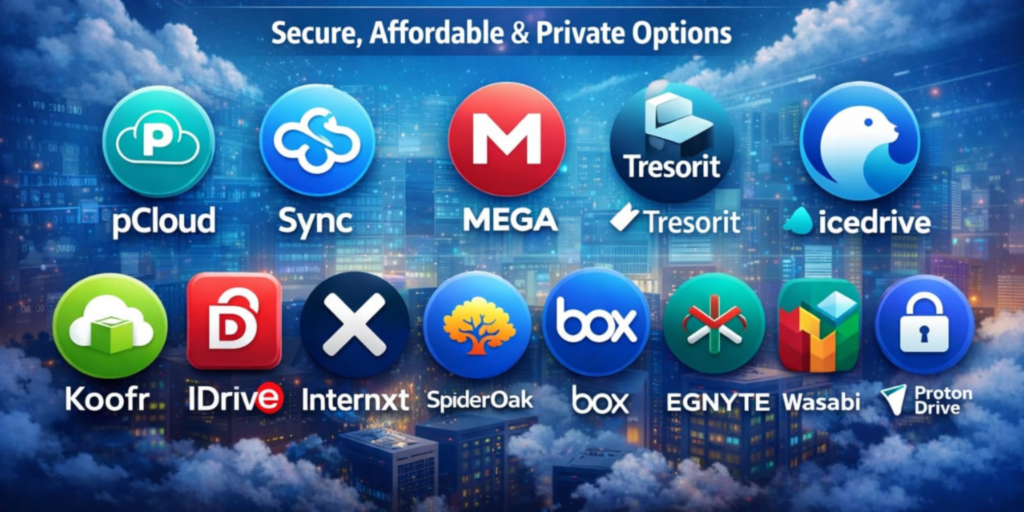
In a connected world where cloud storage is central to both personal files and enterprise data, I’ve tested and reviewed multiple cloud storage alternatives to traditional platforms like Google Drive and Dropbox, focusing on digital storage that improves data control, privacy, and long-term value across different user needs.
1. pCloud – Offers affordable cloud storage, lifetime plans, strong data storage, flexible storage capabilities, smooth file access, and solid encryption with transparent pricing.
2. Sync.com – Ideal for secure cloud storage and private cloud storage, featuring stronger encryption, zero-knowledge security, data protection, and data privacy.
3. MEGA – Attracts creators and startups with generous free storage limits, reliable cross-device access, collaboration tools, and client-side encrypted storage solutions.
4. Tresorit – Enterprise-level secure storage solutions with advanced compliance options, strict data privacy, strong reliability, and controlled access.
5. Icedrive – Modern usability with secure cloud storage, fast backups, automatic backups, and flexible storage flexibility.
6. Backblaze B2 – Developers and enterprises prefer it for storage scalability, simple data storage, excellent cost-efficiency, lower costs, and transparent transfer fees.
7. Koofr – Lightweight hub connecting multiple cloud platforms, easy file access, centralized data management, smooth remote work setups.
8. IDrive – Combines backups with cloud storage, strong data protection, and reliable recovery for local and cloud data storage.
9. Internxt – Decentralized storage, enhanced privacy, user ownership of data control, reducing data mining concerns.
10. SpiderOak – Zero-knowledge security, trusted for secure backups, encrypted syncing, and protection against unauthorized access.
11. Box – Focuses on team collaboration, seamless collaboration, integrated team productivity tools, and strong workflow management.
12. Egnyte – Supports hybrid environments, combining on-premise and cloud storage, ensuring compliance, reliability, and enterprise-level operations.
13. Zoho WorkDrive – Structured collaboration, controlled file access, and scalable storage capabilities for growing enterprises.
14. Wasabi – Fast access, predictable pricing, fewer hidden fees, strong storage scalability, and excellent cost-efficiency.
15. Proton Drive – Swiss-based, maximum privacy, strict data privacy laws, and secure encrypted storage solutions.
Final Thoughts: Which Cloud Storage Alternative Is Right for You?
Choosing the right cloud storage alternative depends on your needs. Comparing modern cloud platforms with Google Drive and Dropbox, the key is balancing privacy, security, affordability, and productivity.
- Secure cloud storage, private cloud storage, encryption, stronger encryption, zero-knowledge security, encrypted storage solutions, and decentralized storage protect data privacy and reduce data mining concerns.
- Affordable cloud storage, transparent pricing, lower costs, free storage limits, and lifetime plans ensure cost-efficiency.
Data Management: Data storage, data management, data protection, automatic backups support enterprise-level operations and smooth data workflows.
Accessibility & Collaboration: File access, cross-device access, team collaboration, seamless collaboration, and remote work via team productivity tools.
Scalability & Flexibility: Storage capabilities, storage scalability, storage flexibility, workflow management for startups, growing enterprises, and remote teams.
Compliance & Reliability: Compliance options, international server locations, reliability, scalability, and innovative features of modern cloud platforms.
This ensures smooth digital storage for personal files and enterprise data while keeping operations secure, flexible, and efficient. Ultimately, the best cloud storage alternative is the one that aligns with your security needs, budget, and growth goals.
FAQs
What Are Cloud Storage Alternatives?
Options beyond Google Drive and Dropbox offering secure cloud storage, private cloud storage, encrypted storage solutions, and decentralized storage.
Which Cloud Storage Solution Is Best for Businesses?
Solutions supporting enterprise operations, data management, backups, scalability, workflow management, and compliance.
Which Cloud Storage Option Offers the Best Privacy?
Platforms with private cloud storage, zero-knowledge security, encrypted storage, and decentralized storage, ensuring data control and enhanced privacy.